If your training feels harder than it should, your recovery is slow, and you are constantly tired despite sleeping well, iron deficiency could be the reason. Research published in the British Journal of Sports Medicine estimates that iron deficiency affects up to 35% of female athletes and around 11% of male athletes in the UK. Yet most active people never get tested. Understanding iron deficiency exercise UK patterns, and what to do about them, can be the difference between plateauing and performing at your actual potential.
Key Insight |
Explanation |
|---|---|
Iron is central to oxygen delivery |
Without adequate iron, haemoglobin cannot carry enough oxygen to working muscles, directly limiting endurance and power output. |
Athletes lose iron faster than sedentary people |
Sweat, foot-strike haemolysis, and GI microbleeding from intense training all accelerate iron loss beyond normal dietary intake. |
Symptoms appear before anaemia does |
Iron deficiency without anaemia still impairs performance. You do not need a low haemoglobin reading to feel the effects. |
Ferritin is the right marker to test |
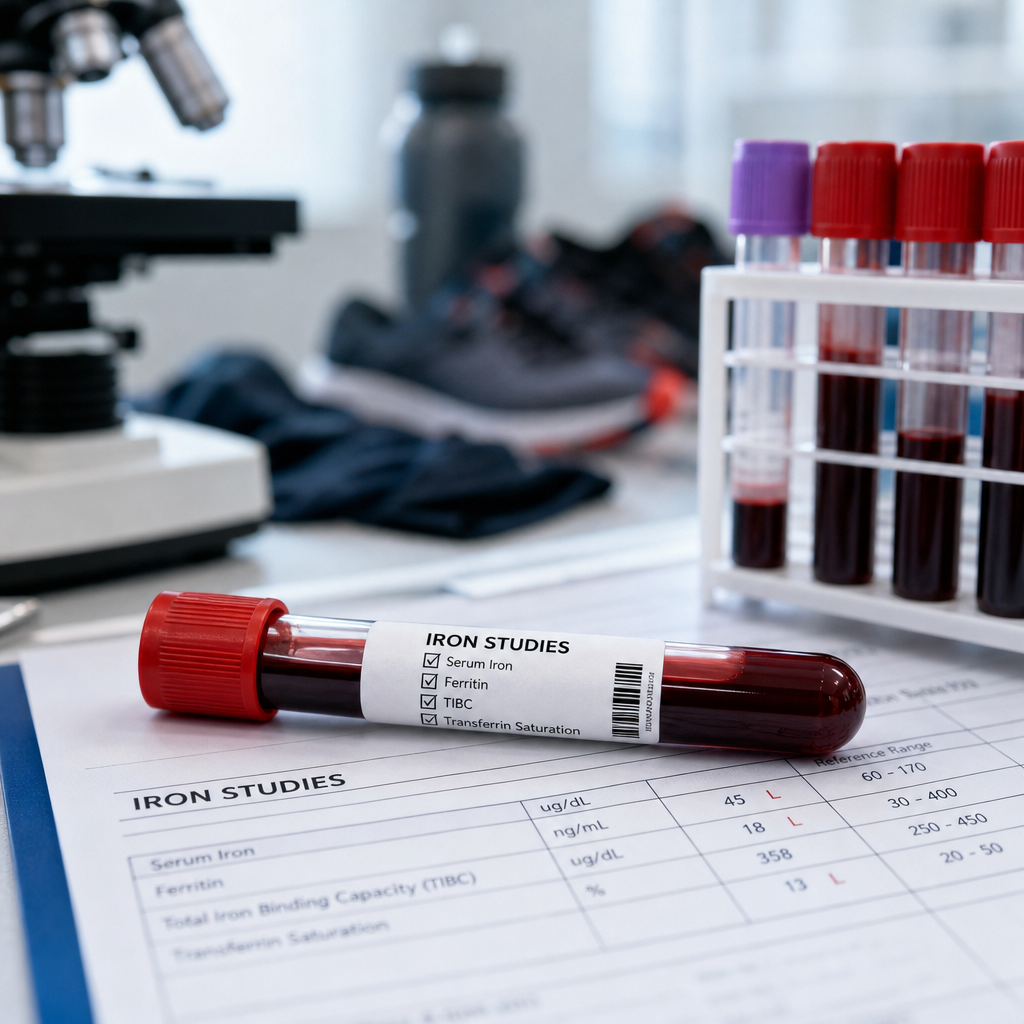
A serum ferritin below 30 micrograms per litre is considered functionally deficient for athletes, even if standard haemoglobin looks normal. |
Not all iron supplements are equal |
Bioavailability varies significantly. Ferrous bisglycinate is better absorbed and gentler on the stomach than ferrous sulphate. |
Vitamin C dramatically improves iron absorption |
Taking iron alongside vitamin C can increase non-haem iron absorption by up to 300%, according to data from the European Journal of Clinical Nutrition. |
Multivitamin formulas with iron suit most active people |
For individuals who are not severely depleted, a well-formulated multivitamin containing iron supports maintenance without over-supplementing. |
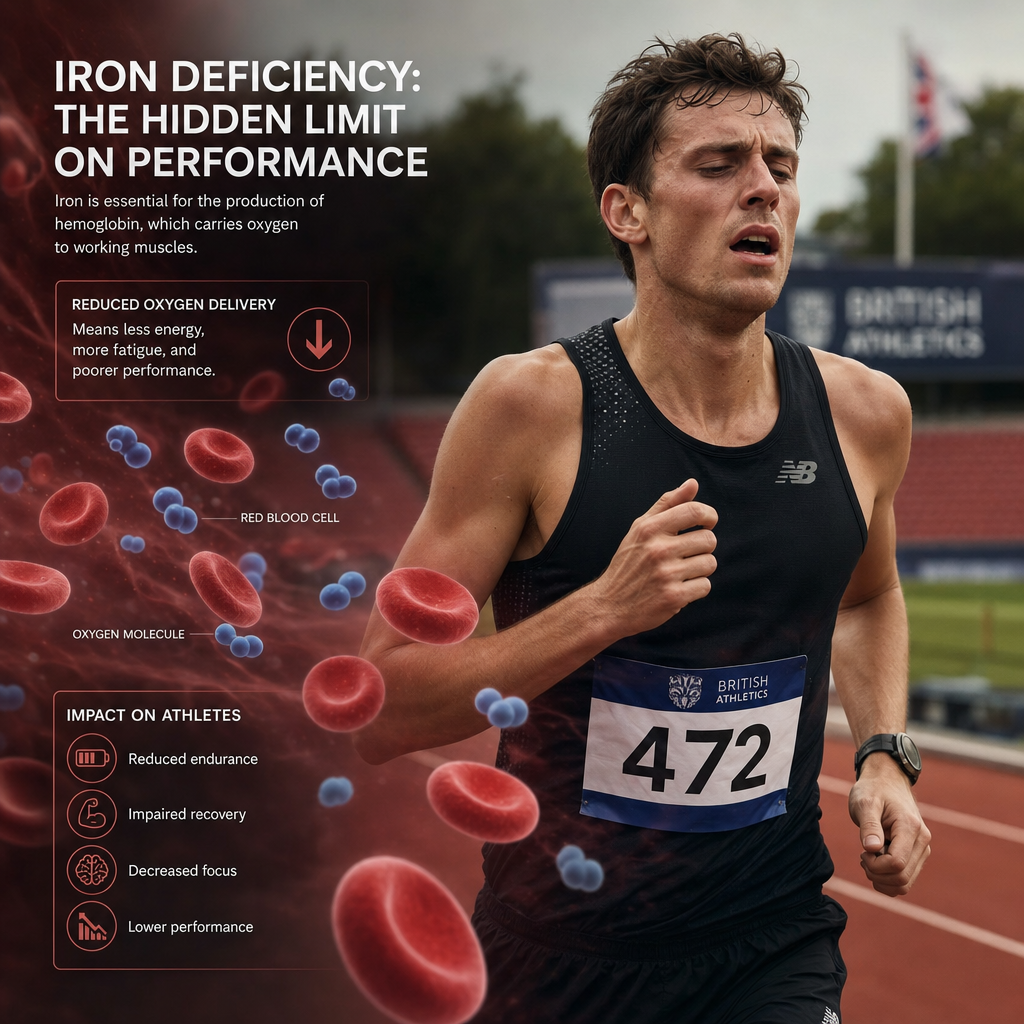
Iron is not optional for performance. It is the mineral that sits at the core of haemoglobin, the protein inside red blood cells that carries oxygen from your lungs to your muscles. When iron stores are low, less oxygen reaches working muscle tissue. The result is reduced aerobic capacity, faster fatigue onset, and slower post-exercise recovery.
Beyond oxygen transport, iron plays a direct role in mitochondrial energy production. The mitochondria are the cellular engines that convert nutrients into usable energy during exercise. Several key enzymes in that process are iron-dependent. This means that even at a cellular level, insufficient iron undermines performance before you ever notice your breathing becoming laboured.
In practice, active individuals with sub-optimal iron levels often describe their training as feeling like they are working through resistance. Heart rate is elevated for the same effort. Pace drops. Sessions that used to feel manageable become a grind. Many attribute this to overtraining or poor sleep, when the underlying cause is nutritional.
Exercise creates iron demand through multiple mechanisms simultaneously, which is why iron deficiency exercise UK trends are so much higher in trained individuals than in the general population.
Repeated impact from running physically destroys red blood cells in the feet with each stride. This is most pronounced in high-mileage runners and is measurable as a drop in serum haptoglobin. The iron released from broken red blood cells is partially excreted rather than recycled, creating a net loss with every session.
Sweat contains small but consistent amounts of iron. For someone training six or more hours per week in warm conditions, this accumulates to a meaningful deficit over weeks. UK-based research from Loughborough University has documented this pattern specifically in endurance athletes training year-round.
High-intensity exercise, particularly running, causes minor GI tract inflammation and microbleeding. Studies show this is worst in the 24 hours after a hard run. NSAIDs taken post-exercise worsen the effect. Over a season of hard training, cumulative GI iron loss is significant.
Training stimulates the body to produce more red blood cells to support higher oxygen demand. More red blood cells means greater iron requirement. Athletes in a hard training block are in a constant state of elevated demand that diet alone often cannot meet.
The frustrating reality of iron deficiency is that its early symptoms are easy to dismiss. Tiredness gets blamed on a busy schedule. Breathlessness during a workout gets attributed to a bad day. But there is a pattern that should prompt a blood test.
The data consistently shows that the following cluster of symptoms warrants investigation: persistent fatigue that does not resolve with rest, reduced exercise tolerance with no change in training load, elevated resting heart rate, frequent infections, difficulty concentrating, and pale inner eyelids or skin pallor. In women, heavy menstrual periods compound the picture significantly, often pushing iron loss beyond what even a clean diet can replace.
A common mistake is waiting for fatigue to become severe before acting. By the time an athlete feels severely impaired, ferritin levels are often critically low and recovery takes weeks or months rather than days.
Pro tip: Track your resting heart rate daily using a fitness tracker. A sustained increase of 5-8 beats per minute with no change in training stress is a reliable early indicator that something physiological, including iron status, warrants investigation.
Standard NHS blood panels do not always catch iron deficiency in athletes. A full blood count showing normal haemoglobin does not rule out iron deficiency, because haemoglobin is the last marker to fall. By the time it drops, iron stores have already been depleted for weeks or months.
The correct marker for athletes is serum ferritin. Ferritin reflects iron stores, not circulating iron. The NHS reference range for ferritin bottoms out around 13 micrograms per litre for women and 30 for men, but sports medicine guidelines consistently recommend that athletes maintain ferritin above 30 micrograms per litre for women and above 50 for men to avoid performance impairment.
Transferrin saturation and soluble transferrin receptor levels give additional nuance if ferritin is borderline. The key message is to ask specifically for ferritin when requesting a blood test, and to share that you are an active individual when interpreting results with your GP.
"Iron deficiency without anaemia is far more common than frank iron deficiency anaemia in athletes, and its consequences for performance are just as real." - Dr. Richard Burden, Sport and Exercise Medicine, Loughborough University
Choosing the right iron supplement for athletes requires understanding the difference between iron forms and how the gut absorbs them.
Ferrous sulphate is the form most often prescribed on the NHS because it is cheap and effective at raising ferritin. The drawback is well-documented GI side effects, including constipation, nausea, and stomach cramps. Athletes training hard often find these side effects interfere with nutrition, hydration, and training quality. Compliance drops sharply when a supplement makes daily life uncomfortable.
Ferrous bisglycinate is a chelated form of iron bound to the amino acid glycine. Clinical data shows it is absorbed at roughly twice the rate of ferrous sulphate and causes significantly fewer GI complaints. For athletes who need consistent supplementation across a training season, this matters enormously. It is the form used in premium sports nutrition formulas precisely because compliance is higher.
Iron absorption is heavily influenced by what surrounds it at the time of ingestion. Calcium, coffee, tea, and high-phytate foods (oats, wholegrain bread) all suppress iron absorption when consumed simultaneously. Taking iron on an empty stomach or with a source of vitamin C maximises uptake. However, taking iron on an empty stomach can worsen GI discomfort, so finding the personal balance between absorption and tolerance is practical and necessary.
Pro tip: If you take an iron-containing supplement, pair it with a small glass of orange juice or a vitamin C-rich food. The data from the European Journal of Clinical Nutrition shows this combination increases non-haem iron absorption by up to 300%, making it one of the highest-impact, lowest-effort nutrition habits an active person can adopt.
For most active individuals who are not severely depleted, standalone high-dose iron supplementation is not appropriate. Over-supplementation carries real risks including oxidative stress, GI damage, and interference with zinc absorption. The smarter approach for maintenance and prevention is a well-constructed multivitamin that includes iron in a bioavailable form alongside the cofactors that support its use.
The Plusssz Multivitamin Iron formula is built around this principle. It is designed specifically for active individuals, not for sedentary adults following a standard diet. The formulation includes iron alongside vitamin C to enhance absorption, B vitamins that support red blood cell production, and a broad mineral complex that addresses the wider micronutrient demands of regular exercise. Critically, it contains no added sugar, which matters for athletes managing carbohydrate intake strategically.
Where competitors in the UK sports supplement market such as Science in Sport or High Five focus primarily on carbohydrate energy delivery, Plusssz focuses on the micronutrient foundation that makes that energy delivery possible. An athlete with depleted iron and B vitamins will not get the full return from a carbohydrate gel or electrolyte drink, because the cellular machinery to convert fuel to performance is compromised.
The Plusssz approach treats nutrition as layered. Electrolyte products support acute hydration and mineral balance during exercise. The multivitamin complex supports the deeper, chronic nutritional status that determines whether training adaptations actually occur. Both layers matter, and neither replaces the other.
Supplementation works best when it reinforces a diet that already prioritises iron-rich foods. The two categories of dietary iron behave very differently in the body, and understanding this distinction is the single most practical thing an active person can take away from this article.
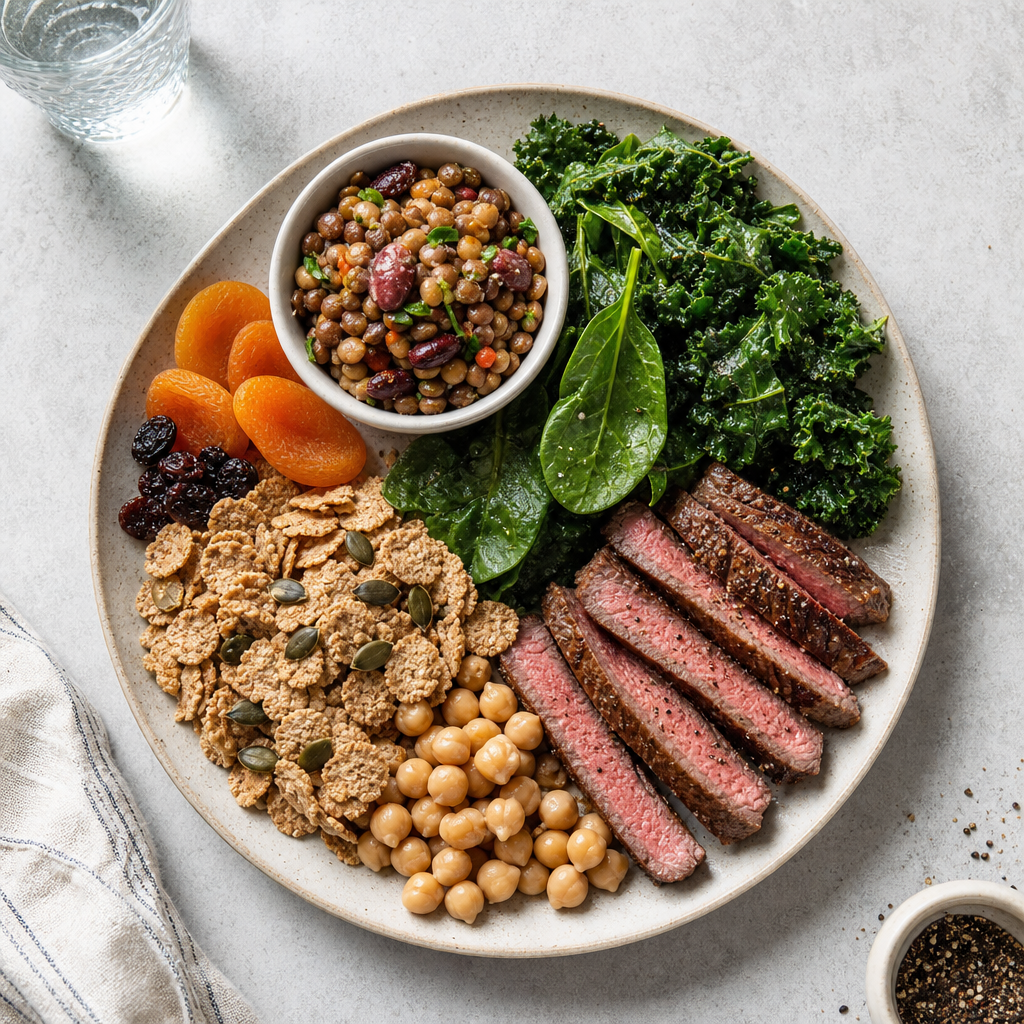
Haem iron comes from animal sources, primarily red meat, liver, poultry, and fish. It is absorbed at a rate of 15-35% regardless of what else is in the meal. It is also largely unaffected by dietary inhibitors. Non-haem iron comes from plant sources, eggs, and fortified foods. It is absorbed at only 2-20% and is highly sensitive to dietary context. Eating a handful of spinach alongside a cup of tea will deliver almost no usable iron because the tannins in tea bind to non-haem iron and block absorption.
For athletes following plant-based or predominantly plant-based diets, the practical implication is that iron requirements from food are approximately 1.8 times higher than for omnivores, according to the National Institutes of Health dietary reference intakes. This gap makes a well-formulated iron-containing supplement not optional but essential.
Practical dietary priorities include: eating red meat two to three times per week if not plant-based, pairing plant iron sources with vitamin C-rich foods consistently, avoiding tea and coffee within one hour of iron-rich meals, and cooking in cast-iron cookware which measurably increases the iron content of acidic foods.
Approach |
Best For |
Key Limitations |
|---|---|---|
High-dose ferrous sulphate (prescribed) |
Athletes with confirmed iron deficiency anaemia (ferritin below 12, low haemoglobin) |
Frequent GI side effects, risk of over-supplementation, requires medical supervision |
Ferrous bisglycinate standalone supplement |
Athletes with low ferritin but no anaemia who need a targeted repletion protocol |
Does not address cofactor deficiencies (B12, B6, folate) that also affect red blood cell production |
Multivitamin with iron (e.g. Plusssz Multivitamin Iron) |
Active individuals maintaining iron status, preventing deficiency during hard training blocks, those on plant-based diets |
Dose may be insufficient for severe depletion; should be combined with dietary strategy for best effect |
Iron deficiency is significantly more common in athletes than in the general population. Estimates suggest it affects up to 35% of female athletes and around 11% of male athletes in the UK. Women are at higher risk due to menstrual iron loss combined with the additional demands of training. Endurance athletes of both sexes are at greatest risk due to the multiple mechanisms through which exercise accelerates iron loss.
Yes, if iron deficiency was the limiting factor, correcting it produces measurable performance gains. Studies show that restoring ferritin to optimal levels in iron-deficient athletes improves VO2 max, reduces perceived exertion at submaximal intensities, and speeds up recovery between sessions. The improvements are most dramatic in endurance athletes and in individuals who had been deficient for an extended period.
Taking a moderate-dose iron-containing multivitamin without a blood test is generally safe for most healthy adults. However, taking high-dose standalone iron supplements without confirmed deficiency is not recommended. Excess iron generates free radicals, stresses the GI tract, and interferes with absorption of other minerals including zinc and copper. Get a ferritin test before starting any high-dose iron protocol.
A single-ingredient iron supplement provides iron only. Plusssz Multivitamin Iron provides iron alongside vitamin C for enhanced absorption, B vitamins for red blood cell synthesis support, and a broader mineral complex tailored to the demands of active individuals. For someone looking to maintain iron status and support overall micronutrient sufficiency during training, the multivitamin approach addresses the full picture rather than one variable in isolation.
Ferritin levels typically begin rising within two to four weeks of consistent supplementation. However, performance improvements often lag behind the blood marker improvements by two to six weeks, because the body needs time to produce new red blood cells and restore mitochondrial enzyme activity. Most athletes report meaningful subjective improvement within six to eight weeks of consistent supplementation combined with dietary support.
Hydration status affects overall nutrient absorption and GI function, but it does not directly modulate iron absorption in the way that vitamin C or calcium does. That said, athletes who are chronically dehydrated have impaired gut motility and reduced absorptive surface area function, which can reduce the efficiency of all nutrient uptake including iron. This is one more reason why combining proper electrolyte hydration with iron support gives the best overall outcome for active individuals.
Have you noticed changes in your training performance that you now suspect might be related to iron levels? Share what you observed and what helped.