Most sports drinks on the UK market contain between 6g and 12g of sugar per 100ml. For someone training five days a week, that adds up to a significant hidden sugar load every single month, without any performance benefit that justifies it. The shift toward no added sugar electrolytes UK formulas is not a marketing trend. It is a response to what the science on glycaemic load, insulin response, and endurance performance actually says. If you are choosing supplements to support an active lifestyle, understanding why sugar-free matters will change how you read every label from this point forward.
Key Insight |
Explanation |
|---|---|
Added sugar does not improve electrolyte absorption |
Sodium and potassium are absorbed independently of simple sugars. Adding sucrose to an electrolyte drink serves flavour, not function. |
Insulin spikes disrupt steady endurance energy |
A sugar-loaded drink mid-session can trigger a reactive glucose dip, leaving athletes feeling sluggish within 30 to 40 minutes. |
UK labelling rules distinguish added sugar from total sugars |
A product can show fruit-derived sugars in total carbohydrates while honestly claiming no added sugar. Read both lines on the nutrition panel. |
Sugar-free vitamins UK formulas often use better binders and fillers |
Removing sugar from tablets and gummies forces manufacturers to find higher-quality excipients, which often improves tablet stability and bioavailability. |
Dental health is a real supplementation concern |
Repeated sugar exposure from fizzy or chewable supplements erodes enamel. This is an underreported side effect of sugar-containing supplement formats. |
No added sugar is not the same as low calorie |
Some no-added-sugar products use maltodextrin or starch as a base, which still raises blood glucose. Check the full carbohydrate breakdown. |
Consistency matters more than any single ingredient |
A healthy supplement choice is one you can take daily without accumulating unnecessary sugar, additives, or excess calories across a season of training. |
The conventional argument for adding sugar to electrolyte drinks was that glucose would speed up intestinal uptake of sodium via the SGLT1 co-transporter. That mechanism is real, but the quantities required are modest. Around 2g to 6g of glucose per 100ml activates the transporter. Many commercial sports drinks contain two to three times that amount, which means the excess sugar is providing nothing for absorption and everything for calorie and glycaemic load.
In practice, athletes who switch from sugared electrolyte drinks to no-added-sugar formulas during training report more consistent energy levels across sessions longer than 60 minutes. The reactive dip from a sugar spike at the 45-minute mark is a well-documented complaint among club-level runners and cyclists. Removing that spike removes the crash.
Pro tip: If you are using an electrolyte product during a session that lasts under 45 minutes, the sugar content matters even less. Your glycogen stores will not be depleted. You are hydrating, not fuelling. Choose a no-added-sugar formula and save your carbohydrate strategy for genuine endurance events.

Active individuals often assume that because they train hard, glycaemic load is irrelevant to them. The data consistently shows this is wrong. Even trained athletes experience impaired fat oxidation at high blood glucose levels, which matters for anyone doing sessions over 75 minutes who wants to preserve muscle glycogen for the final push.
A 2023 review published in the British Journal of Nutrition confirmed that high-glycaemic carbohydrate intake during moderate exercise suppresses fat oxidation by up to 30% compared to iso-caloric low-glycaemic intake. For anyone training for body composition as well as performance, that is a meaningful difference in substrate use.
"Carbohydrate quality, not just quantity, significantly affects metabolic flexibility in trained individuals during submaximal exercise." - British Journal of Nutrition, 2023
Tablets, capsules, and effervescent powders all have the potential to contain added sugars as coating agents, binding aids, or flavour carriers. A common mistake is assuming that because a product is a tablet rather than a drink, it contains no sugar. Gummy vitamins are the worst offenders. A typical gummy multivitamin contains 2g to 4g of added sugar per serving, which across a year of daily use adds up to over 700g of sugar consumed in the name of health.
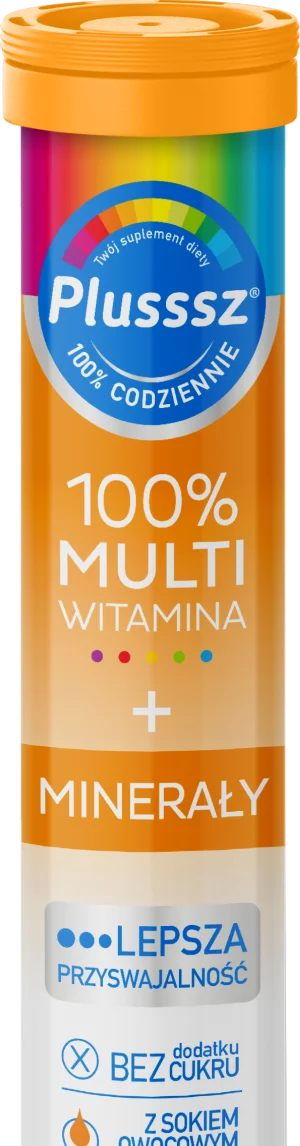
Plusssz UK's approach of formulating without added sugar across both their electrolyte hydration range and multivitamin complexes addresses this directly. It is not just about one product. It is about removing sugar accumulation from the entire supplement routine.
Under UK Food Standards Agency rules post-Brexit, the phrase "no added sugar" has a specific legal meaning. It means no monosaccharides or disaccharides have been added to the product, and no ingredients added for their sweetness that contain sugars, such as fruit juice concentrate. It does not mean the product contains zero sugars overall. A product could contain naturally occurring lactose from a milk protein base and still legitimately carry the claim.
This is worth knowing because some supplement brands use the label to mislead. A product sweetened with concentrated apple juice, for example, has had sugar added in practice, even if the apple concentrate technically fails the legal threshold for the restriction. Read the ingredients list, not just the front-of-pack claim.
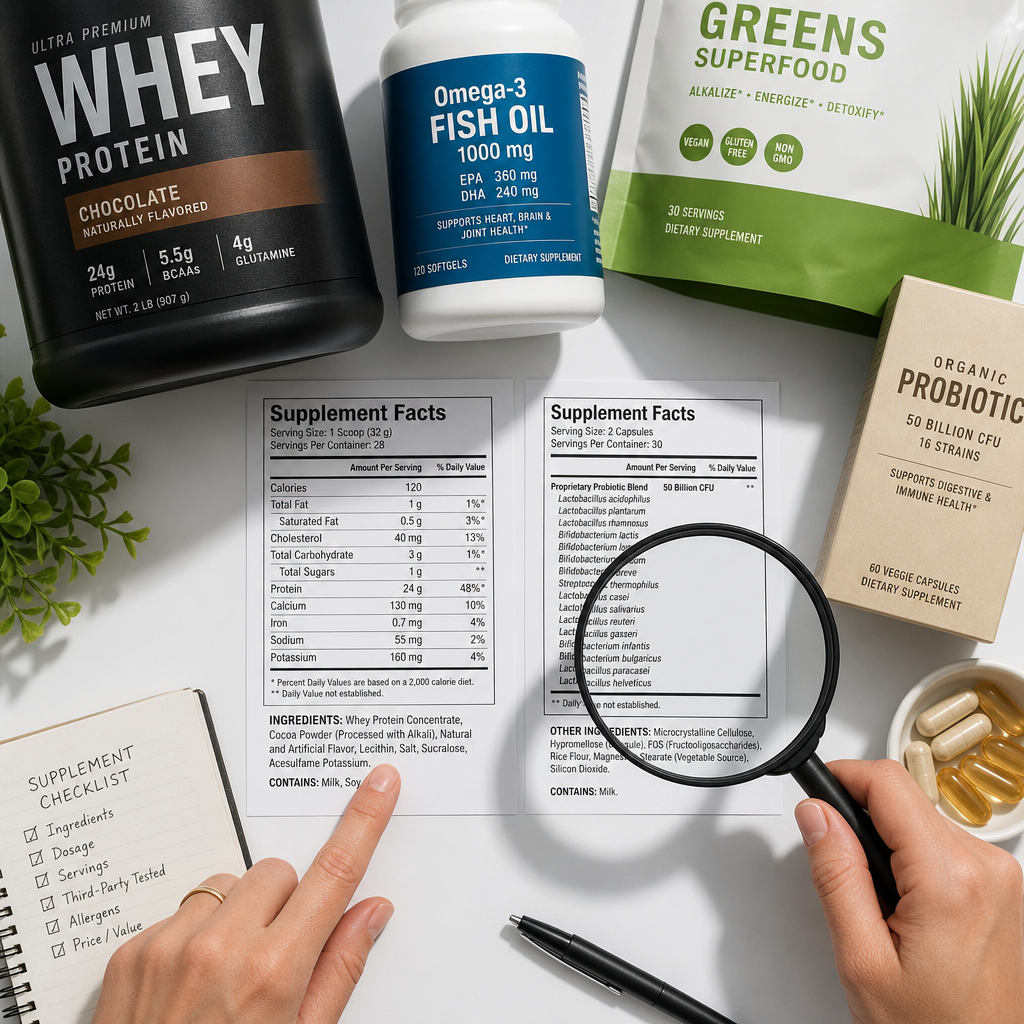
Look at two lines on the UK nutrition facts panel. First, find "Carbohydrates" and then the sub-line "of which sugars." For a genuine no-added-sugar electrolyte product, this figure should be very low, typically under 0.5g per 100ml or per serving depending on format. Second, look at the ingredients list for anything ending in "-ose" such as glucose, fructose, or sucrose, and for terms like "invert sugar," "cane sugar," "honey," or "agave."
Pro tip: Cross-reference the ingredients list with the total carbohydrate count. If total carbohydrates are non-trivial but the ingredients show no recognisable sugar source, look for maltodextrin or modified starch. These are processed carbohydrates that behave like sugar in the body and will not appear under the "of which sugars" line.
The short answer is no. Vitamins and minerals do not require sugar to be absorbed. Fat-soluble vitamins including A, D, E, and K require dietary fat, not sugar, to cross the intestinal wall effectively. Water-soluble B vitamins and vitamin C are absorbed via specific transport mechanisms that have nothing to do with glucose availability at the point of ingestion.
So why do so many UK multivitamins contain sugar? Cost, palatability, and shelf-stability. Sugar makes tablets easier to compress in manufacturing, improves the flavour of chewables, and acts as a cheap preservative in syrups. These are commercial reasons, not nutritional ones.

Improved assimilability, meaning how well the body actually absorbs and uses a nutrient, depends on the form of the mineral or vitamin used, not on whether sugar is present in the tablet. Magnesium bisglycinate, for example, is significantly better absorbed than magnesium oxide regardless of the sugar content of either product. Methylcobalamin outperforms cyanocobalamin for vitamin B12 uptake in most population groups.
Plusssz UK's formulations for different demographics, including women, men, seniors, and sports enthusiasts, focus on these bioavailable forms. That is where real assimilability gains come from, not from adding sugar to mask the taste of a cheaper mineral salt.
A consistent daily vitamin routine with added sugar creates a pattern of low-level, repeated oral sugar exposure. The NHS reports that frequency of sugar exposure is a stronger driver of dental caries than total sugar quantity. Taking a sugary chewable vitamin morning and evening creates two daily acidic exposures to tooth enamel, every single day, for years.
For seniors, who are already a demographic targeted by many multivitamin brands, this concern is amplified. Reduced saliva production with age means less natural buffering against acid. A genuinely sugar-free vitamins UK product removes this risk entirely.
Making a healthy supplement choice requires evaluating three things: ingredient quality, format suitability, and what the product does not contain. Most supplement marketing focuses entirely on what is in the product. The absence of unnecessary additives, including added sugar, artificial fillers, and excessive binders, is equally important.
Start by matching the supplement format to your routine. Effervescent tablets dissolved in water are a practical format for electrolytes because they allow precise dosing and dissolve completely without gritty residue. Capsules are well-suited to multivitamin complexes because they protect sensitive vitamins from oxidation. Gummies are the format most likely to contain added sugar and the least practical for anyone serious about their supplement routine.
Demographic-Specific Needs Change What a Healthy Choice Looks Like
A 22-year-old male athlete and a 65-year-old woman have different electrolyte and micronutrient requirements. Blanket recommendations fail both of them. For the athlete, the priority is sodium and potassium replenishment during and after high-intensity sessions, with magnesium to support muscle recovery. For the senior woman, the priority shifts toward calcium, vitamin D3, and B12, all in their most bioavailable forms, without the sugar load that generic products often include.
Plusssz UK's demographic-targeted approach recognises this. A formulation designed specifically for women looks different from one designed for men not because of marketing, but because hormonal differences affect iron requirements, folate needs, and the ratio of certain B vitamins that the body prioritises.
Approach |
Sugar Content and Source |
Best Suited For |
|---|---|---|
Traditional sugared sports drink (e.g., typical high street formats) |
6 to 12g sugar per 100ml, usually from sucrose or glucose syrup. Provides rapid but unstable energy alongside electrolytes. |
Ultra-endurance events over 2.5 hours where calorie replacement is a primary concern alongside hydration. |
No added sugar electrolyte tablets or powders (e.g., Plusssz UK format) |
Zero added sugars. Electrolytes delivered without glycaemic load. Uses natural flavour and approved sweeteners where needed. |
Daily training sessions under 90 minutes, gym use, general active hydration, and anyone managing blood glucose carefully. |
Plain water with separate food-based carbohydrate |
No sugar from supplementation. Carbohydrate timing managed through whole food intake around training. |
Athletes who prefer to separate hydration and fuelling entirely and eat a banana or oat bar alongside their water. |
The data consistently shows that for the majority of training sessions, which are under 90 minutes and of moderate intensity, plain electrolytes without added sugar outperform sugared alternatives for sustained energy and post-session recovery markers. The sugar-loaded option earns its place in genuine endurance contexts but is overused by everyday gym-goers who do not need the carbohydrate load.
The honest answer is: almost everyone who uses supplements regularly. But certain groups see the clearest benefit. People managing type 2 diabetes or insulin resistance need to treat every source of added sugar as clinically significant, including their electrolyte drinks. A common mistake in this group is carefully controlling diet while unknowingly consuming 8g to 15g of sugar per day from supplement products.
People focused on body composition, whether fat loss or lean muscle building, benefit because removing hidden sugar from their routine makes calorie tracking more accurate and removes the insulin interference with fat oxidation described earlier.
Seniors who take daily vitamins for bone health, immune support, and energy metabolism are often on long-term supplementation programmes spanning years. Over a ten-year period, daily exposure to even 2g of added sugar from a multivitamin adds up to 7.3kg of supplementary sugar. That figure makes the case for no-added-sugar formulas clearly, without needing to invoke any dramatic health claims.
Hormonal fluctuations across the menstrual cycle affect insulin sensitivity. In the luteal phase, many women experience reduced insulin sensitivity, making sugar intake more likely to produce glycaemic spikes. A supplement routine that removes added sugar reduces one variable in an already hormonally complex picture. This is a specific, practical reason why a women's multivitamin formulation without added sugar is genuinely preferable, not just a nice-to-have.
Pro tip: If you are recommending Plusssz UK products to a friend, the no-added-sugar credential is one of the simplest and most persuasive points to lead with. Most people are surprised to discover how much sugar accumulates from supplements they assumed were healthy. Showing them the label comparison does the convincing.
No. Electrolyte absorption, specifically of sodium, potassium, and magnesium, does not require significant quantities of added sugar. The SGLT1 co-transporter mechanism that links glucose to sodium absorption is activated at low glucose concentrations that are already present in the body during exercise. For sessions under 90 minutes, no-added-sugar electrolyte formulas perform equally well for hydration and rehydration outcomes.
Most reputable no-added-sugar supplement brands use approved sweeteners such as steviol glycosides from stevia, sucralose, or acesulfame potassium. These provide palatability without the glycaemic impact of sugar. Stevia-based sweeteners are increasingly preferred because they are plant-derived and have a clean regulatory profile in the UK under current FSA rules.
You can trust the claim when it is applied correctly, but always verify it by reading the full ingredients list. Under UK food labelling law, no added sugar has a specific definition. However, some manufacturers use concentrated fruit juice or honey as sweetening agents while arguing these fall outside the restriction. If you see any form of concentrated juice or syrup in the ingredients, the product is effectively sweetened with sugar regardless of the front-of-pack label.
In tablet and capsule formats, taste is irrelevant since you swallow them whole. In effervescent or powder formats, the taste difference has narrowed significantly as stevia and flavour technology has improved. In practice, a well-formulated no-added-sugar electrolyte drink is indistinguishable in palatability from a sugared one for most users. The adjustment period, if any, is a few days at most.
Not automatically. A no-added-sugar supplement may still contain carbohydrates from ingredients like maltodextrin or modified starch, which would not be suitable for a strict ketogenic diet. For keto compliance, check that total net carbohydrates per serving are below your personal threshold, typically under 2g to 5g depending on your approach, not just that added sugar is absent.
Many mainstream UK sports nutrition brands, including some well-known competitors, formulate primarily for the mass-market taste preference, which typically means higher sugar content to maximise palatability ratings. Plusssz UK prioritises formulation integrity across its full range, meaning both the electrolyte products and the multivitamin complexes are built without added sugar, using bioavailable mineral and vitamin forms. The demographic-specific ranges, including separate formulas for women, men, and seniors, also reflect a level of nutritional specificity that generic products do not provide.
What has your experience been with switching to no-added-sugar supplements? Have you noticed a difference in energy levels or how your body responds during training? Share your experience below.