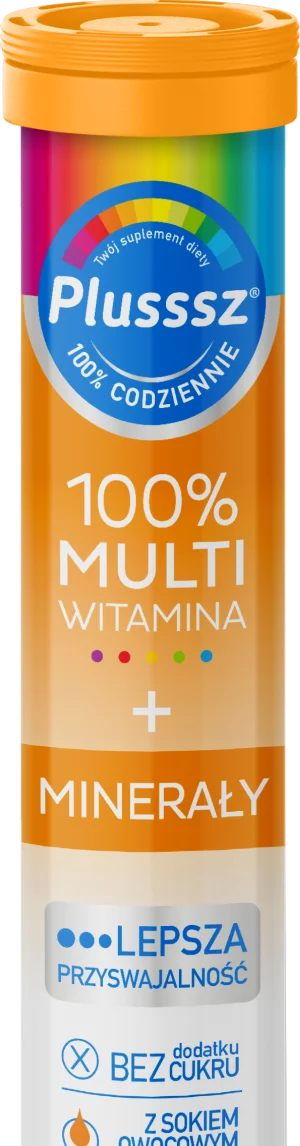
Most active women in the UK are under-fuelled in ways they do not even realise. Research published by the British Nutrition Foundation shows that iron, vitamin D, and magnesium are the three most commonly deficient nutrients in women aged 19 to 50. If you train regularly, those gaps widen because exercise accelerates depletion. Choosing the right women's multivitamin UK is not a luxury or a marketing gimmick. It is a measurable performance and recovery decision. This article breaks down exactly which nutrients matter, why the doses in many mainstream products fall short, and how a formula like Plusssz Multivitamin WOMAN is built differently for the demands of real physical activity.
Key Insight |
Explanation |
|---|---|
Iron loss doubles during menstruation and intense training |
Active women lose iron through sweat, foot-strike haemolysis, and monthly blood loss. A dose of 14mg per day is the UK recommended intake, but many women need dietary support above baseline. |
Vitamin D deficiency affects over 20% of UK adults |
The NHS recommends 10mcg daily for all UK adults, especially from October to March. Active women training indoors compound this risk further. |
Magnesium supports muscle recovery, not just sleep |
Magnesium bisglycinate is absorbed significantly better than magnesium oxide. Look for the form of magnesium, not just the quantity, on the label. |
B12 and folate are critical for energy and cell repair |
Women following plant-based or low-calorie diets are at high risk of B12 deficiency, which directly impacts exercise performance and red blood cell production. |
No added sugar matters more than you think |
Many chewable or gummy multivitamins add sugar to improve taste, which undermines the health rationale. Capsule or tablet forms without added sugars are a cleaner option. |
Assimilability is the metric most brands ignore |
Nutrient form determines absorption. Zinc citrate absorbs better than zinc oxide. Methylated B12 performs better than cyanocobalamin. Always check the compound, not just the element. |
A multivitamin fills gaps, not a full diet |
The most effective approach is a whole-food diet with targeted supplementation for documented shortfalls. A multivitamin is a safety net, not a meal replacement. |
The nutritional demands of an active woman are categorically different from those of a sedentary one, and also different from those of an active man. Hormonal cycles, bone density trajectories, and higher rates of certain micronutrient losses all create a specific profile that a generic one-size-fits-all supplement will not address properly.
In practice, women who exercise four or more times per week burn through B vitamins faster because these nutrients are consumed during energy metabolism. The more energy you produce, the faster your stores of B1, B2, B6, and B12 are drawn down. At the same time, sweat losses during exercise deplete electrolytes and trace minerals including zinc, magnesium, and sodium.
A common mistake is assuming that eating a balanced diet removes the need for supplementation. The data consistently shows otherwise. Even among health-conscious individuals, dietary surveys conducted by Public Health England reveal that a significant percentage of UK women fall below the Lower Reference Nutrient Intake for iron, folate, and vitamin D. These are not small margins. They are gaps that affect energy, immunity, and long-term bone health.
The answer is not to over-supplement broadly but to supplement smartly. A well-formulated women's multivitamin UK product closes specific gaps without creating new imbalances. The key is knowing which nutrients are consistently under-delivered by diet, which forms absorb best, and which doses are actually meaningful rather than cosmetic.


When working through what vitamins for active women matter most, the evidence points to a short list of consistently under-supplied nutrients. These are not obscure compounds. They are foundational micronutrients that UK dietary data repeatedly flags as insufficient in women of reproductive age and beyond.
Iron, vitamin D, magnesium, folate, B12, and zinc form the foundation. Each one has a specific mechanism relevant to physical activity. Iron supports oxygen transport. Vitamin D supports muscle function, immune regulation, and calcium absorption. Magnesium participates in over 300 enzymatic reactions including those governing muscle contraction and protein synthesis. Folate and B12 are required for red blood cell formation and DNA repair. Zinc is essential for immune function and the repair of exercise-induced tissue damage.
Beyond the core six, omega-3 fatty acids, vitamin K2, and iodine round out a comprehensive women's micronutrient profile. Iodine is particularly relevant in the UK because it is primarily found in dairy and fish. Women following plant-based diets are frequently deficient. Vitamin K2 works synergistically with both vitamin D and calcium to ensure calcium is directed into bones rather than arterial walls.
The order of priority depends on the individual woman's diet, training load, and life stage. But if you are looking for a starting point based on population-level UK data, iron and vitamin D are consistently at the top.
Pro tip: Before purchasing any multivitamin, check your most recent blood test results for ferritin and 25-OH vitamin D. These two markers are the most commonly deficient in active UK women and are available through most GP practices or private health screening services.
Iron deficiency is the most common nutritional deficiency globally, and active women sit at particularly high risk. Menstrual blood loss accounts for a significant share, but exercise adds several additional depletion pathways. Foot-strike haemolysis, where red blood cells are damaged by repeated impact during running, is a well-documented phenomenon. Sweat losses, increased gastrointestinal turnover during prolonged exercise, and elevated production of hepcidin following intense training all contribute to a net negative iron balance in women who train seriously.
The UK Reference Nutrient Intake for iron is 14.8mg per day for women of menstruating age, compared to 8.7mg for men. Yet surveys consistently show that average dietary iron intake in UK women falls short of this figure, often sitting closer to 9 to 11mg per day. That is a significant deficit even before factoring in exercise-related losses.
Not all supplemental iron is created equal. Ferrous fumarate and ferrous bisglycinate are absorbed better than ferrous sulphate and cause fewer gastrointestinal side effects. A common mistake is taking iron supplements with calcium-rich foods or coffee, both of which inhibit absorption. Pairing iron with vitamin C, on the other hand, enhances non-haem iron absorption meaningfully.
Low iron does not always present as full anaemia. Sub-optimal ferritin levels, even within the technically normal range, have been associated with fatigue, reduced VO2 max, and impaired cognitive function. If you feel chronically tired despite adequate sleep and nutrition, iron status is one of the first things worth checking.
The UK sits at a latitude where meaningful skin synthesis of vitamin D is only possible from approximately April through September. Between October and March, sunlight UVB levels are insufficient to trigger vitamin D production regardless of how much time you spend outdoors. The NHS advises all UK adults to consider a daily 10mcg supplement during this period. For active women who train primarily indoors, this recommendation applies year-round.
Vitamin D does far more than support calcium absorption. Receptors for vitamin D are found in skeletal muscle tissue, and clinical evidence links vitamin D deficiency to reduced muscle strength, increased injury risk, and impaired immune function. A study cited by the British Journal of Sports Medicine found that low vitamin D status was significantly associated with an increased risk of stress fractures in female athletes.
Supplementing vitamin D alone without adequate vitamin K2 can increase circulating calcium without ensuring it is directed to the right tissues. Vitamin K2 activates matrix Gla protein and osteocalcin, two proteins that regulate where calcium is deposited in the body. In practice, this means vitamin D and K2 should be treated as a functional pair, not independent nutrients. Many standard supermarket multivitamins include vitamin D but omit K2 entirely.
Calcium itself remains important, particularly for women approaching perimenopause when oestrogen-mediated calcium retention begins to decline. The target of 700mg per day from dietary and supplemental sources combined is achievable through diet for most women who consume dairy. But for those who avoid dairy or follow a vegan diet, targeted supplementation becomes necessary.

The eight B vitamins function as coenzymes in the metabolic pathways that convert carbohydrates, fats, and proteins into usable energy. Without adequate B1 (thiamine), B2 (riboflavin), B3 (niacin), and B5 (pantothenic acid), the efficiency of ATP production drops. For active women, this translates directly into reduced endurance, slower recovery, and greater perceived exertion at the same workload.
B6 (pyridoxine) is particularly relevant to women because it participates in oestrogen metabolism and serotonin synthesis. Women who use hormonal contraceptives have been shown to have lower circulating levels of B6 and B12, making supplementation more relevant for this group. A women's multivitamin that does not account for this interaction is, frankly, leaving a significant gap.
Folate is the naturally occurring form of vitamin B9. Folic acid is the synthetic form used in most supplements. Approximately 40% of the population carries a variant of the MTHFR gene that reduces their ability to convert folic acid into its active form, 5-methyltetrahydrofolate. For these individuals, supplements containing methylfolate are significantly more effective. Look for the label to specify methylfolate or 5-MTHF rather than simply folic acid.
For women who may become pregnant, folate is non-negotiable. The recommendation of 400mcg daily prior to conception and through the first trimester is one of the most evidence-backed recommendations in nutritional medicine. Active women planning a pregnancy should ensure their multivitamin delivers this in a bioavailable form.
Pro tip: If your multivitamin lists folic acid rather than methylfolate, and you know you carry an MTHFR gene variant or simply want better assurance of absorption, seek a formula specifying 5-MTHF on the ingredient panel. Plusssz Multivitamin WOMAN uses bioavailable nutrient forms as a core part of its formulation philosophy.
Magnesium is involved in over 300 enzymatic processes, including those governing muscle relaxation, protein synthesis, and glycogen storage. For active women, the two most practically significant functions are muscle recovery after training and sleep quality. Magnesium deficiency is strongly associated with muscle cramps, poor sleep architecture, and heightened anxiety, all of which impair training consistency and adaptation.
The problem with many magnesium supplements is the form used. Magnesium oxide is cheap to manufacture and common in budget multivitamins, but its bioavailability is extremely low, estimated at around 4%. Magnesium bisglycinate and magnesium citrate are absorbed significantly more efficiently and cause fewer digestive complaints. When evaluating any women's multivitamin, the magnesium compound listed matters more than the milligram quantity on the front of the pack.
The UK Reference Nutrient Intake for magnesium is 270mg per day for adult women. Exercise increases urinary and sweat losses. Female athletes and regular gym-goers are routinely found to fall below this target through diet alone, particularly if their calorie intake is restricted as part of a body composition goal.
"Magnesium deficiency is one of the most common nutritional deficiencies in sport, yet it is rarely screened for in routine blood tests because serum magnesium levels do not accurately reflect intracellular stores." - Sports Dietitians Australia, Position Statement on Micronutrients in Sport
Timing also matters. Magnesium taken in the evening supports sleep quality more reliably than morning dosing. If your multivitamin is taken with breakfast, consider a separate evening magnesium supplement if recovery and sleep are primary concerns.
Not all women's multivitamins are formulated with the same priorities. The differences between a budget supermarket option, a general health brand, and a performance-oriented formula like Plusssz Multivitamin WOMAN are significant enough to affect outcomes meaningfully. The table below compares the key dimensions.
Feature |
Generic Supermarket Multivitamin |
Plusssz Multivitamin WOMAN |
|---|---|---|
Nutrient forms used |
Often oxide and sulphate forms (low bioavailability) |
Bioavailable forms including bisglycinate and methylated B vitamins |
Sugar content |
Often includes added sugars, especially in gummy formats |
No added sugar formulation |
Tailoring to active women |
Generic adult formula with minor adjustments |
Dosages and compounds selected for active women's specific needs |
Vitamin D inclusion |
Often included but at low doses (5mcg or less) |
Meaningful dose aligned with NHS guidance for UK climate conditions |
Iron inclusion |
Variable, often low or absent to avoid interactions |
Included at a dose relevant to women's higher reference intake |
K2 inclusion |
Rarely included |
Included to work synergistically with vitamin D and calcium |
The comparison above is not a value judgement against every budget product. Some supermarket multivitamins are a reasonable starting point. But if you are training four or more times per week, managing a restricted diet, or dealing with specific symptoms like fatigue or muscle cramps, the differences in formulation quality directly translate into differences in effect.
Reading supplement labels is a practical skill that most active women are never formally taught. The front of the pack is marketing. The back panel, specifically the nutrient table and ingredients list, is where the real information lives.
The first thing to check is the form of each nutrient, not just the quantity. As covered throughout this article, zinc citrate outperforms zinc oxide, magnesium bisglycinate outperforms magnesium oxide, and methylcobalamin outperforms cyanocobalamin for B12. If the label lists the element without specifying the compound, contact the manufacturer or assume the cheaper form has been used.
The second thing to check is the dose relative to UK reference values. Many supplements boast impressive percentages of the Nutrient Reference Value, but these values are set for the general population and not for active individuals with elevated needs. A product delivering 100% NRV of iron in a low-bioavailability form is providing considerably less functional nutrition than one delivering 70% NRV in a bisglycinate form.
The third thing to examine is what is absent. Unnecessary fillers, artificial colours, and added sugars are flags. The product should be doing useful nutritional work with every ingredient listed. For active women tracking their macros or managing specific health conditions, transparency on inactive ingredients matters as much as the active compound list.
Pro tip: Search for the brand name alongside "third-party tested" or check for certification logos such as Informed Sport on the label. For competitive athletes subject to anti-doping regulations, third-party batch testing is not optional. It is the baseline requirement for any supplement entering your routine.
A women-specific formulation is meaningfully different from a standard adult multivitamin. Women have higher iron requirements, different hormonal profiles affecting B6 and B12 metabolism, and specific concerns around bone density that make K2 and vitamin D more critical. A standard multivitamin calibrated for an average adult, often skewed toward male physiology in older formulas, will frequently under-dose iron and overlook nutrients like K2 altogether. For active women specifically, the difference between a well-formulated women's multivitamin and a generic product is not trivial.
In theory, yes. In practice, UK population data from Public Health England consistently shows that large proportions of women fall below reference intakes for iron, vitamin D, folate, and magnesium through diet alone. Exercise compounds these shortfalls. A well-designed supplement does not replace dietary quality. It fills the gaps that even careful eating leaves, particularly during high training loads, calorie restriction phases, or seasonal vitamin D depletion in the UK winter months.
Most fat-soluble vitamins, including A, D, E, and K, absorb better when taken with a meal that contains some dietary fat. Taking your multivitamin with breakfast or lunch is generally a sound approach. If your formula contains iron, avoid taking it alongside dairy products or coffee, which inhibit iron absorption. Some women find splitting the dose, one tablet in the morning and one at night, improves tolerability and reduces the mild nausea that high-dose B vitamins can cause on an empty stomach.
Science in Sport and High Five both focus primarily on sports performance nutrition, meaning carbohydrates, protein, and hydration. Their product ranges are built around fuelling and recovery from an energy standpoint. Plusssz Multivitamin WOMAN is specifically a micronutrient formula designed around the documented nutritional gaps in active women, using high-bioavailability compounds and a no-added-sugar policy. These are different categories serving different needs. A serious active woman may use both: electrolytes and carbohydrates for training fuel, and a targeted multivitamin to address baseline micronutrient status.
This depends entirely on your starting point. If you are measurably deficient in iron or vitamin D, improvements in energy and mood can be noticeable within four to eight weeks of consistent supplementation. If your baseline nutrient status was already adequate, you are less likely to notice a dramatic change, because the supplement is working as a preventive measure rather than correcting a deficiency. Blood testing before and after an eight-week protocol is the most reliable way to assess impact rather than relying solely on subjective energy perception.
Yes, and for active women, the combination is logical. Electrolyte products typically supply sodium, potassium, and sometimes magnesium and calcium in hydration-relevant quantities. A multivitamin provides the broader micronutrient foundation. The two products serve different functions and do not conflict. The one interaction worth watching is total magnesium intake across both products. If your multivitamin already delivers 200mg of magnesium and your electrolyte supplement adds another 100mg, you are at a reasonable total. Exceeding 400mg of supplemental magnesium per day can cause loose stools in some individuals.
Have you recently changed your supplement routine as an active woman? Share what has worked or what has not in the comments below. Your experience might help another woman in the Plusssz community make a better-informed decision.