Most people lose around 2.5 litres of fluid per day through normal bodily functions. For older adults, that number carries far more risk than it does for a 30-year-old athlete. The kidney function declines with age, the thirst response weakens, and the body's ability to conserve water drops significantly. The result is that electrolytes for seniors UK is not a niche wellness topic but a genuine daily health priority. If you are an active older adult, or you care for one, understanding why plain water is often not enough is the first step to staying well hydrated every single day.
Key Insight |
Explanation |
|---|---|
Thirst is an unreliable signal in older adults |
Research shows that the thirst mechanism weakens with age, meaning seniors can become clinically dehydrated before feeling thirsty. Waiting for thirst is not a safe strategy. |
Sodium and potassium are the most critical electrolytes for seniors |
These two minerals regulate fluid balance, nerve function, and muscle contraction. Low levels in older adults are directly linked to falls, confusion, and fatigue. |
Many common medications increase electrolyte loss |
Diuretics, laxatives, and certain blood pressure medications accelerate sodium and potassium excretion, making supplemental electrolytes even more important. |
No-added-sugar electrolyte formulas are the safest choice |
High-sugar sports drinks are inappropriate for most seniors due to blood sugar concerns. Formulas like Plusssz Electrolytes SENIOR use no added sugar. |
Hydration for older adults is seasonal, not just exercise-related |
Hot weather, central heating, and illness all increase fluid and electrolyte losses independent of physical activity levels. |
Kidney efficiency declines with age |
Older kidneys are less efficient at concentrating urine and conserving sodium, which means more electrolytes are lost even during light daily activity. |
Electrolyte drinks designed for seniors differ from standard sports formulas |
Senior-specific formulations account for lower caloric needs, adjusted mineral ratios, and ingredients that support bone health alongside hydration. |
The physiology of ageing creates several compounding vulnerabilities when it comes to fluid balance. Total body water decreases from roughly 60 percent in young adults to around 50 percent or less in adults over 65. This smaller fluid reservoir means there is less buffer against daily losses from breathing, sweating, and urination.
The kidneys play a central role here. From middle age onwards, glomerular filtration rate drops steadily, and older kidneys are measurably less efficient at conserving sodium and water. According to the NHS, dehydration is one of the most common causes of hospital admissions among people over 65 in the UK. That is not a statistic about extreme athletes. It is a statistic about everyday life.
On top of the physiological changes, many older adults deliberately restrict fluid intake to avoid frequent toilet trips, particularly overnight. This behavioural pattern accelerates what the body is already struggling to manage. The combination of reduced body water, impaired kidney function, blunted thirst, and restricted drinking creates a genuine daily hydration deficit in a large proportion of the UK senior population.
Aldosterone, the hormone that signals the kidneys to retain sodium, becomes less effective with age. Antidiuretic hormone (ADH) production also becomes dysregulated. The practical outcome is that older adults lose more sodium in their urine relative to younger people even when fluid intake looks adequate on paper.
This is precisely why hydration older adults requires more than just drinking enough water. The mineral content of that fluid matters as much as the volume.
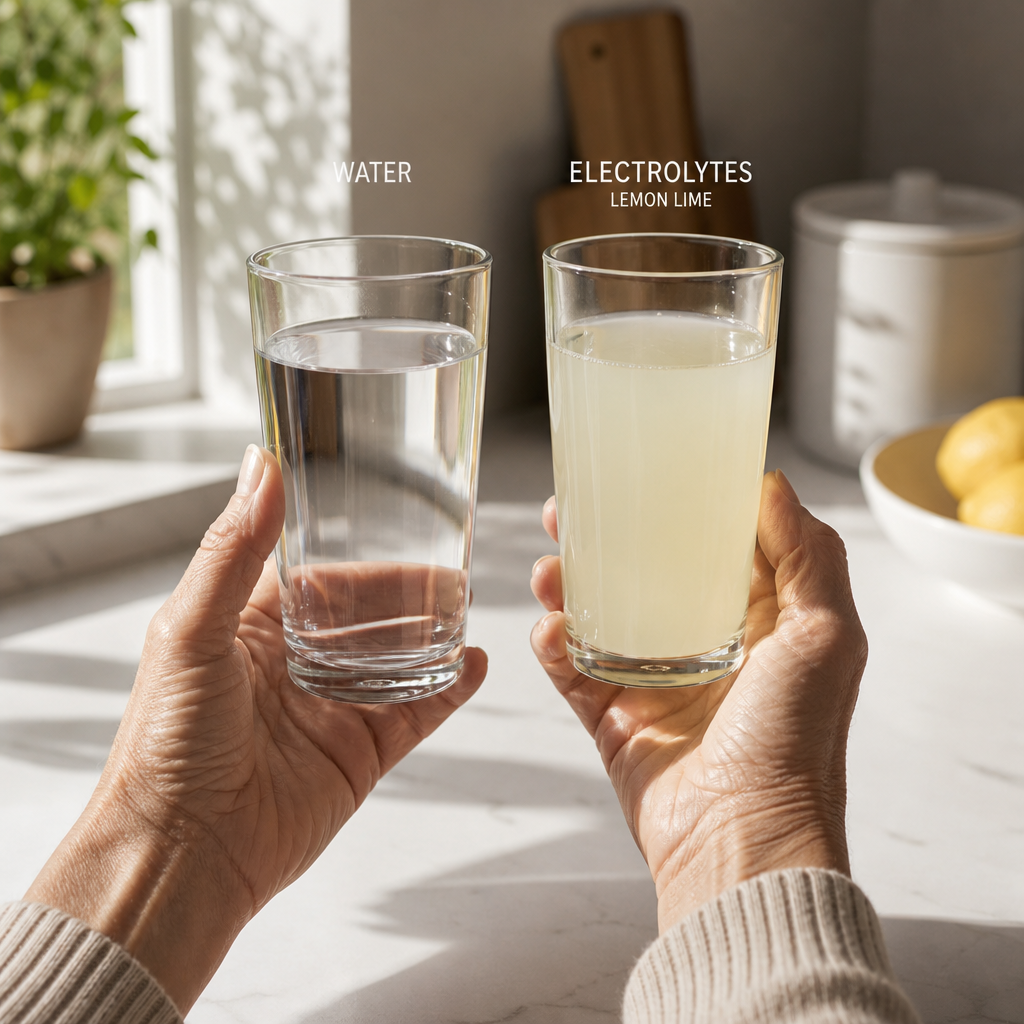

Electrolytes are minerals that carry an electric charge when dissolved in fluid. The most physiologically important ones for hydration are sodium, potassium, magnesium, calcium, and chloride. Each one performs a specific function that cannot be substituted by any other mineral.
Sodium is the primary electrolyte controlling fluid distribution between the inside and outside of cells. It is also essential for nerve impulse transmission. A drop in serum sodium, known as hyponatraemia, causes symptoms ranging from nausea and headache to confusion, seizures, and, in severe cases, coma. In older adults, even mild hyponatraemia increases fall risk significantly.
Potassium works in direct partnership with sodium to maintain the electrical potential across cell membranes. Low potassium, or hypokalaemia, causes muscle weakness and cramps, irregular heartbeat, and fatigue. Older adults on diuretics are particularly vulnerable to potassium depletion.
Magnesium is involved in over 300 enzymatic reactions, including those that regulate blood pressure and muscle contraction. It also affects sleep quality and mood, both of which are common concerns in older adults. Calcium, while widely associated with bone health, is also critical for muscle function and nerve signalling. These two minerals are often underrepresented in basic hydration products aimed at younger athletes.
"Mild dehydration of just 1 to 2 percent of body weight can impair cognitive function in older adults, including memory, attention, and reaction time." Source: National Institute on Aging, USA.
The data consistently shows that correcting electrolyte balance is not just about physical performance. For seniors, it has measurable effects on mental clarity, mood stability, and fall prevention. Plain water addresses volume but does nothing to replace these minerals.
Pro tip: If an older adult experiences frequent leg cramps at night, low magnesium or potassium is almost always a contributing factor. An electrolyte supplement taken in the evening can reduce the frequency significantly within two to three weeks.
The most dangerous aspect of dehydration in older adults is how easy it is to misattribute the symptoms. Fatigue, confusion, dizziness, and low mood are all common signs of dehydration. They are also common symptoms that get attributed to ageing, medication side effects, or other health conditions. This means dehydration goes unaddressed for longer.
A common mistake is checking only for dark urine as the sole dehydration indicator. In older adults, certain medications, vitamin supplements, and foods can affect urine colour independently of hydration status. Relying on urine colour alone is not sufficient.
A sudden or gradual increase in confusion, difficulty concentrating, or unusual irritability in an older adult should prompt an immediate assessment of hydration. Studies published by the British Journal of Nutrition have demonstrated that fluid restriction equivalent to just 1 percent body weight loss measurably impairs attention and short-term memory in adults over 65.
Physical signs to watch for include dry mouth and lips, sunken eyes, reduced skin elasticity (tested by pinching the back of the hand and observing how quickly the skin returns to normal), and a significant decrease in urination frequency. Headache and dizziness when standing up, known as orthostatic hypotension, is another underrecognised sign of inadequate fluid and sodium intake.
In practice, carers and family members are often the first to notice these signs before the older adult themselves does. This is one reason why building a consistent daily electrolyte habit, rather than waiting for symptoms, is the more effective approach.

The argument for drinking more plain water is well-intentioned but physiologically incomplete for older adults. When you drink large volumes of plain water without adequate electrolytes, you can actually dilute the sodium concentration in your blood. This dilution effect, overhydration or hyponatraemia, is a real risk for people who drink a lot of water but eat a low-sodium diet, which is common among seniors following heart-healthy or reduced-salt dietary advice.
Electrolyte drinks fill the gap by delivering fluid alongside the minerals needed to retain it within the correct fluid compartments. This is not about performance enhancement in the sports sense. For seniors, it is fundamentally about maintaining normal cellular function and neurological stability throughout the day.
Approach |
Key Benefit |
Key Limitation for Seniors |
|---|---|---|
Plain Water |
Freely available, zero calories, adequate for mild daily losses in healthy younger adults |
Does not replace sodium, potassium, or magnesium lost through ageing-related processes and medication use. Can dilute blood sodium in high volumes. |
Standard Sports Drinks (e.g., Science in Sport, High Five) |
Effective electrolyte and carbohydrate delivery for high-intensity athletes |
Often high in sugar, high in calories, and formulated for sport performance rather than age-related hydration needs. Not appropriate as a daily senior supplement. |
Plusssz Electrolytes SENIOR |
No added sugar, formulated specifically for older adult physiological needs, includes minerals supporting bone and nerve function alongside core hydration electrolytes |
Requires consistent daily use rather than ad hoc consumption for best results. |
The difference between a standard sports electrolyte product and a senior-specific formulation is not trivial. High-sugar formulas are poorly suited to older adults who may be managing blood glucose, following diabetic dietary guidelines, or simply do not need the carbohydrate loading that endurance athletes require.
Pro tip: When comparing electrolyte products for an older adult, check the sodium content first. A meaningful dose should deliver at least 200 to 400 milligrams of sodium per serving, alongside potassium and magnesium. If the product lists these minerals in microgram amounts rather than milligrams, the dose is almost certainly too low to make a physiological difference.
Plusssz is a UK-based supplement brand built around the principle that different demographics have different nutritional needs. Their Plusssz Electrolytes SENIOR formulation is not a relabelled sports drink. It is a product built around the specific physiological realities of older adult hydration, with no added sugar and a mineral blend that goes beyond the basic sodium and potassium combination found in most hydration products.
The formulation approach reflects an understanding that seniors dealing with joint concerns, bone density considerations, and energy metabolism changes need more from a daily hydration supplement than a 25-year-old runner does. This is the same philosophy behind Plusssz's broader product range, which includes targeted formulations for women and men in active demographics, all centred on improved nutrient assimilability and clean ingredient profiles.
Many mainstream hydration products, including well-known brands in the UK sports nutrition market, derive a significant portion of their palatability from sugar. This creates a problem for daily use among older adults, particularly those managing type 2 diabetes, metabolic syndrome, or simply following NHS guidance to reduce free sugar intake.
A no-added-sugar formula can be consumed daily without contributing to glycaemic load. This is a practical, not just a marketing, distinction. The goal of senior hydration is consistent, habitual use across every day of the year, not occasional consumption around specific exercise sessions.
For those exploring the full range of hydration and multivitamin products, the Plusssz website at plusssz.co.uk provides detailed formulation information across their active adult and senior-specific product lines.
Building a consistent hydration habit for an older adult requires structure rather than willpower. Relying on thirst, as established earlier, does not work. The approach that consistently produces the best outcomes is time-anchored drinking: attaching fluid intake to existing daily events such as waking up, meals, medication times, and pre-sleep routines.
A practical daily framework for a senior targeting consistent hydration would look like this: a glass of water or electrolyte drink upon waking (when overnight losses are highest), an electrolyte supplement mid-morning, water with each meal, and a smaller fluid intake in the early evening to avoid overnight toilet disruption. Total target intake should be guided by individual health conditions, but the NHS recommends approximately 1.5 to 2 litres of fluid per day for most older adults under normal conditions, and more during warm weather or illness.
The UK's temperate climate creates a false sense of security about heat-related dehydration. During summer heatwaves, which are increasing in frequency according to the Met Office, older adults in the UK face disproportionate dehydration risk. The body's heat regulation mechanisms are less efficient in older adults, meaning more fluid and electrolytes are lost through sweating even during low-intensity activity or simply sitting in a warm room.
Central heating in winter creates a parallel risk. Low-humidity heated indoor environments increase respiratory water losses, and many older adults in the UK spend extended periods indoors during colder months. Year-round electrolyte supplementation, rather than seasonal use, is the more effective approach for this population.
Pro tip: Setting a phone reminder or placing an electrolyte supplement sachet next to the kettle or morning medication removes the cognitive burden of remembering to hydrate. Environmental cues are more reliable than intention for habit formation in older adults managing multiple daily routines.
Not in formulation or purpose. Standard sports electrolyte products are built around carbohydrate delivery and rapid rehydration for high-intensity exercise. Senior-specific formulas like Plusssz Electrolytes SENIOR are designed for daily consistent use, contain no added sugar, and include mineral combinations that support bone density, nerve function, and the specific deficiencies associated with ageing, rather than athletic performance.
This depends on individual health status, medication use, activity level, and climate. As a baseline, most older adults benefit from one serving of an electrolyte supplement daily. Those taking diuretics, living in warm environments, or recovering from illness may benefit from two servings. Always check with a GP if there are pre-existing kidney conditions or concerns about potassium or sodium levels, as some medical conditions require supervised electrolyte management.
Excessive electrolyte intake can be harmful, particularly for individuals with impaired kidney function, heart failure, or conditions requiring sodium restriction. However, for the vast majority of otherwise healthy active older adults, a properly dosed senior electrolyte supplement consumed according to label directions poses no meaningful risk. The greater and more common risk in this population is under-consumption, not over-consumption.
Morning is generally the most effective time because overnight fluid and mineral losses are significant and the body is in a mild deficit upon waking. A second serving mid-afternoon is beneficial during hot weather or following physical activity. Taking electrolytes in the late evening can be counterproductive if it increases the need for overnight urination, which disrupts sleep quality in older adults.
In theory, a varied diet rich in vegetables, fruit, dairy, and moderate salt should provide adequate electrolytes. In practice, many older adults in the UK eat a narrower dietary range due to appetite changes, dental issues, or cost factors. Medication effects further reduce electrolyte retention independent of dietary intake. Supplementation with a senior-specific formula fills this gap reliably without requiring dietary overhaul.
Because the formula contains no added sugar, it is appropriate for use by most people managing blood glucose levels. However, individuals with diabetes should review the full ingredient list and, where in doubt, consult their GP or diabetes nurse before adding any new supplement to their routine. The no-added-sugar characteristic is specifically what makes this product more suitable than most commercial sports hydration drinks for this population.
Have you started using an electrolyte supplement as part of your daily routine, or are you helping a senior family member manage their hydration? Share what has worked for you in the comments below.