You can take a supplement with an impressive dose on the label and still absorb only a fraction of it. This is the uncomfortable reality of vitamin assimilability, and it is something most supplement brands would rather not discuss openly. Research published in the American Journal of Clinical Nutrition has shown that absorption rates for the same nutrient can vary by as much as 400% depending solely on the chemical form used. For active people trying to perform, recover, and feel their best, that gap is not a minor detail. It is the difference between a supplement that works and one that is expensive urine.
Assimilability refers to how effectively your body can take up, transport, and use a nutrient after you consume it. It is a broader concept than bioavailability alone. Bioavailability measures how much of a nutrient enters systemic circulation. Assimilability goes further, asking whether that nutrient reaches the target tissue and is converted into its active form. A vitamin can be technically bioavailable without being properly assimilated.
In practice, magnesium oxide has a bioavailability of roughly 4%, while magnesium glycinate sits closer to 80%. Both appear on supplement labels as simply "magnesium." The difference is entirely in the form. This is why reading a dose figure without understanding the compound behind it tells you almost nothing useful.
Key Insight |
Explanation |
|---|---|
Form determines absorption more than dose |
The chemical structure of a vitamin dictates how efficiently your gut can absorb it. A lower dose in a superior form typically outperforms a higher dose in a cheap form. |
Magnesium oxide is the most common waste of money in UK supplements |
Used in the majority of budget multivitamins, it has roughly 4% absorption. Magnesium citrate, malate, or glycinate are measurably superior alternatives. |
Methylated B vitamins matter for a large portion of the population |
Approximately 40% of people carry a MTHFR gene variant that impairs conversion of folic acid into usable folate. Methylfolate and methylcobalamin bypass this issue entirely. |
Vitamin D3 outperforms D2 for raising serum levels |
Multiple meta-analyses confirm D3 (cholecalciferol) raises blood 25(OH)D levels approximately 87% more effectively than D2 (ergocalciferol). |
Fat-soluble vitamins need dietary fat to be absorbed |
Vitamins A, D, E, and K require co-ingestion with dietary fat. Taking them with a meal containing fat can increase absorption by up to 32%, according to research from the Journal of the Academy of Nutrition and Dietetics. |
Chelated minerals absorb significantly better than inorganic salts |
Chelation binds a mineral to an amino acid, making it recognisable to gut transport systems and protecting it from competing ions in the digestive tract. |
Electrolyte balance affects how vitamins are transported |
Adequate hydration and sodium-potassium balance is required for nutrient transport across cell membranes. Poor electrolyte status can reduce vitamin uptake even when the vitamin form is optimal. |
Every nutrient travels through a gastrointestinal system that has specific transport mechanisms. Those mechanisms recognise certain molecular structures and ignore others. When a vitamin is delivered in a form the body cannot readily identify, it either passes through largely unused or requires multiple conversion steps, each of which reduces the net amount available to cells.


Take vitamin B12. The cyanocobalamin form found in the cheapest supplements must first have the cyanide molecule removed, then be converted to methylcobalamin or adenosylcobalamin before it is active. That is two conversion steps dependent on liver function and adequate enzyme activity. Methylcobalamin, on the other hand, is already in a form cells can use directly. For older adults or anyone with compromised liver function, the difference in effective dose between these two forms is enormous.
The Role of Gut Environment in Vitamin Form Utilisation
Stomach acid, gut bacteria, and the integrity of the intestinal wall all influence how well different vitamin forms are absorbed. Iron in its ferrous form (Fe2+) absorbs far more readily than ferric iron (Fe3+) because the gut's primary iron transporter, DMT1, operates specifically on the ferrous form. Ascorbic acid (vitamin C) in the gut actually aids this conversion, which is why vitamin C and iron are commonly co-supplemented.
The gut microbiome also participates directly in vitamin assimilability. Gut bacteria synthesise certain B vitamins and vitamin K2, and a disrupted microbiome can reduce the bioavailability of vitamins taken in supplement form. This is one reason why active individuals under training stress, who often experience gut permeability changes, may need higher-quality forms of vitamins to achieve the same serum levels as sedentary individuals.
Pro tip: If you are comparing two multivitamins and one costs significantly less, look at the magnesium form first. Magnesium oxide is a near-universal indicator that the entire formula was built around cost, not absorption. It is the cheapest form available and one of the least absorbable.
The supplement industry in the UK is not tightly regulated on form disclosure. A product can legally say it contains 100mg of magnesium without specifying whether that is magnesium glycinate or magnesium oxide. These are categorically different products in terms of what your body actually receives. Knowing which vitamins are most commonly sold in inferior forms lets you read labels more critically.
Magnesium oxide dominates the budget supplement market because it is dense in elemental magnesium by weight, allowing manufacturers to hit label claims cheaply. The problem is that most of that magnesium never leaves the gut. It draws water into the intestine, which is why high-dose magnesium oxide also acts as a laxative, and exits before absorption can occur. Magnesium citrate, glycinate, and malate are the forms worth taking, with glycinate being particularly suitable for people with sensitive digestion.
Folic acid is the synthetic oxidised form of folate. The body must convert it to 5-methyltetrahydrofolate (5-MTHF) via the MTHFR enzyme pathway to use it. Roughly 40% of the UK population carries variants in the MTHFR gene that reduce this conversion capacity by 30 to 70%. For these individuals, folic acid supplementation produces elevated unmetabolised folic acid in the blood, which some research links to reduced natural killer cell activity. Methylfolate (5-MTHF) is the form that bypasses this entirely. Any serious multivitamin formulation for active adults should use methylfolate, not folic acid.
Vitamin K exists in multiple forms. K1 (phylloquinone) is primarily used by the liver for clotting factors. K2, specifically the MK-7 subform (menaquinone-7), has a much longer half-life in the blood and is the form shown in clinical research to activate osteocalcin in bone and matrix Gla-protein in arterial walls. Many multivitamins contain K1 only, or use the shorter-acting MK-4 form. For bone density support and cardiovascular health, MK-7 is the clinically validated option.

"The bioavailability of a nutrient is not a fixed property of the nutrient itself, but of the interaction between the nutrient form, the individual's physiology, and the food matrix." - European Food Safety Authority (EFSA), Scientific Opinion on Dietary Reference Values
The table below compares the most common market forms of three key nutrients. These are the forms you will encounter most frequently in UK supplement aisles, including in products from brands like Science in Sport, High Five, and ORS Hydration. Use it as a reference when reading ingredient labels.
Nutrient |
Standard Cheap Form (and why it underperforms) |
Superior Form (and the measurable advantage) |
|---|---|---|
Magnesium |
Magnesium oxide. Approximately 4% absorption. Causes digestive discomfort at higher doses. Primarily functions as a laxative rather than a mineral supplement. |
Magnesium glycinate or citrate. 40 to 80% absorption depending on gut status. Well tolerated. Glycinate form also supports sleep quality due to the glycine component. |
Vitamin B12 |
Cyanocobalamin. Requires liver-dependent conversion steps to become active. Poorly absorbed in individuals with low stomach acid or intrinsic factor deficiency. |
Methylcobalamin. Already in the active form. Directly usable by cells. Retained in tissue longer than cyanocobalamin according to comparative pharmacokinetic studies. |
Zinc |
Zinc oxide. Low solubility in the gut environment. Competes poorly with other minerals for absorption via shared transporters. Often causes nausea at effective doses. |
Zinc picolinate or bisglycinate. Picolinate form shows absorption advantages in human trials. Bisglycinate is gentler on the stomach and equally well absorbed. |
Electrolyte products and multivitamins operate on different mechanisms, but both share the same fundamental requirement: the nutrients they deliver must actually reach the cells that need them. A formula with superior electrolyte forms will replenish sodium, potassium, and magnesium more efficiently than one using basic salts. This matters acutely after training, when cells are actively pulling electrolytes back in to restore membrane potential.
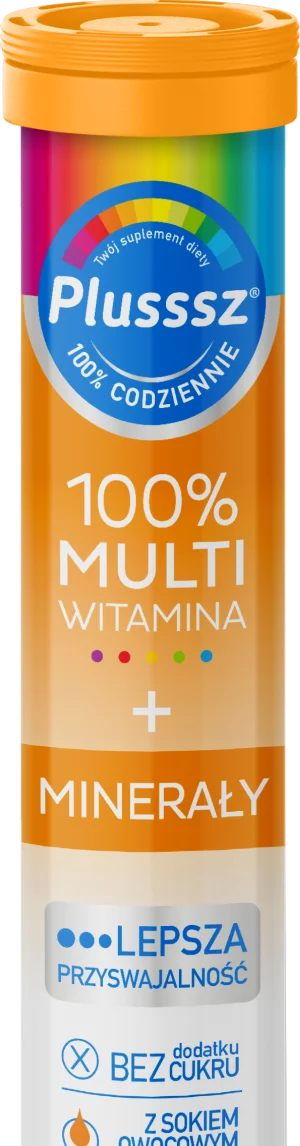
At Plusssz, the approach to formulation starts with this principle. Rather than hitting headline dose numbers with cheap compounds, the focus is on using forms with demonstrated assimilability, keeping the formula free of added sugar, and ensuring the vitamin and mineral combinations do not compete with each other for the same gut transporters. Zinc and copper, for example, compete for absorption via the same metallothionein pathway. Getting the ratio right is as important as choosing the right form.
Hydration status itself is a silent factor in supplement absorption. Nutrients require water as a transport medium across the intestinal wall and through the bloodstream. An athlete who supplements correctly but trains in a chronically under-hydrated state will see blunted results from even a well-formulated product. This is why electrolyte hydration and vitamin supplementation are not separate strategies for active individuals. They are interdependent.
Pro tip: When taking fat-soluble vitamins (A, D, E, K), pair them with the fattiest meal of your day, not just any meal. A meal containing at least 10 to 15 grams of fat has been shown to increase absorption of fat-soluble vitamins meaningfully compared to a very low-fat meal. Black coffee and a vitamin D tablet in the morning is a common and entirely counterproductive routine.
The UK supplement market is growing, with the British Nutrition Foundation estimating that over 60% of UK adults take at least one supplement regularly. The problem is that bioavailability vitamins UK conversations rarely happen at the point of sale. Most purchasing decisions are driven by price, brand recognition, or the boldness of the number on the front of the packaging. "1000mg" sells better than "300mg as magnesium glycinate," even though the latter represents more actual magnesium reaching the bloodstream.
Brands competing primarily on price have a structural incentive to use cheap forms. Magnesium oxide costs a fraction of magnesium glycinate. Cyanocobalamin is substantially cheaper than methylcobalamin. Folic acid is far less expensive to source than 5-MTHF. When a supplement brand is building a product to a price point rather than a performance standard, these are the compromises that happen invisibly inside the capsule.
A common mistake is assuming that products at a similar price point are equivalent in quality. Two electrolyte drinks at £1.50 per serving can have radically different actual electrolyte delivery depending entirely on the forms used. The ingredient list tells you what is in the product. Only the full formulation details tell you how much of it will actually do something useful in your body.
Even the best vitamin form can be undermined by the conditions surrounding it. Supplement absorption is not purely a chemistry problem. It is also a timing, interaction, and physiology problem. Understanding these variables lets you get the most from a well-formulated product.
Water-soluble vitamins (B vitamins and vitamin C) absorb well regardless of meal timing, but taking them with food reduces the likelihood of nausea at higher doses. Fat-soluble vitamins require fat present in the gut, as discussed above. Iron absorbs best on an empty stomach but causes more gastric irritation that way. Vitamin C taken alongside iron increases its absorption significantly, while calcium and iron taken together compete for the same transporter and reduce each other's uptake.
Gastric acid production declines with age. This matters considerably for B12 absorption because stomach acid is required to cleave B12 from food proteins before the intrinsic factor-mediated absorption mechanism can operate. Seniors taking cyanocobalamin in standard tablet form may absorb very little. Sublingual methylcobalamin bypasses this problem entirely by absorbing through the oral mucosa. This is one reason why age-specific multivitamin formulations should use different vitamin forms than general adult products.
Calcium, iron, magnesium, and zinc all share divalent mineral transporter pathways in the gut. Taking large doses of any single mineral can suppress absorption of the others. This is why balance across a full mineral profile matters more than simply hitting a large dose of one mineral. A formula that provides 500mg of calcium but suppresses zinc and magnesium absorption in the process may produce a net negative effect on mineral status.
Active individuals also face higher baseline mineral losses through sweat than sedentary people. Sodium, potassium, magnesium, and chloride all exit the body through perspiration. This is not a reason to megadose, but it is a reason to prioritise highly assimilable forms, because even small percentage differences in absorption become meaningful at the volumes required by someone training seriously.
Vitamin assimilability refers to how effectively your body can absorb, convert, and actually use a vitamin after you take it. It goes beyond bioavailability, which measures only how much enters the bloodstream, to ask whether the nutrient reaches target tissues in an active, usable form. A vitamin with poor assimilability may show measurable blood levels but fail to produce meaningful effects at the cellular level.
No, and the data consistently shows this is a false trade-off. A higher dose of magnesium oxide does not catch up to a moderate dose of magnesium glycinate in terms of actual mineral delivery to tissue. Beyond absorption, excess minerals in the gut in non-absorbable forms cause osmotic imbalances and digestive discomfort. Superior form at an appropriate dose is always the better choice over inferior form at a higher dose.
Look for the full chemical name of each nutrient, not just the nutrient name itself. Magnesium glycinate, magnesium citrate, methylcobalamin, methylfolate, zinc picolinate, and cholecalciferol (vitamin D3) are indicators of a quality-first formulation. If the label lists only "magnesium" or "vitamin B12" without specifying the compound, that is a sign the manufacturer is not transparent about form, which is itself a warning sign.
For fat-soluble vitamins, timing around a fat-containing meal is important and can increase absorption by measurable amounts. For water-soluble B vitamins and vitamin C, timing is less critical to absorption but matters for tolerability. Magnesium taken in the evening as glycinate can support sleep quality due to glycine's calming effect on the nervous system. Iron is best absorbed away from calcium-rich foods and dairy. So yes, timing does matter, but it varies by nutrient.
Electrolytes maintain the fluid balance and electrical gradients across cell membranes that nutrient transporters depend on to function. Sodium-potassium pumps, in particular, drive secondary active transport of many nutrients including glucose, amino acids, and some vitamins into cells. When electrolyte levels are insufficient, these transport mechanisms work less efficiently, reducing the cellular uptake of nutrients even when blood levels appear adequate. Proper hydration with a balanced electrolyte profile is a foundational requirement for good vitamin assimilability.
Yes. Active individuals have higher rates of oxidative stress, greater mineral losses through sweat, and often greater demand on mitochondrial energy pathways. This makes the forms of B vitamins, magnesium, and antioxidant vitamins particularly consequential. Methylated B vitamins support energy metabolism more directly. Highly absorbable magnesium supports muscle function and recovery. Vitamin D3 combined with K2 as MK-7 supports the bone remodelling that occurs in response to training load. These are not theoretical distinctions. They produce different measurable outcomes in active physiology.
Bioavailability is a pharmacokinetic measure: how much of a dose enters systemic circulation. Assimilability is a functional measure: how much of that dose reaches the target tissue and is converted into the active form the body can actually use. A vitamin can have reasonable bioavailability but poor assimilability if it requires conversion steps that the individual's genetics, age, or health status impair. This distinction is why looking beyond bioavailability figures alone gives a more accurate picture of whether a supplement form will actually work.
If you have switched supplement brands or changed vitamin forms and noticed a real difference in how you feel during training or recovery, share your experience in the comments. Real-world feedback from active people is genuinely useful for others making the same decisions.