Losing just 1 to 2 percent of your body weight through fluid loss is enough to measurably reduce your ability to concentrate, recall information, and make decisions. Most UK office workers hit that threshold before lunch without realising it. The connection between dehydration concentration work performance is not soft wellness advice. It is documented neuroscience with direct consequences for how you function between 9am and 5pm. If your afternoons feel foggy, your focus disappears before the 3pm meeting, or you find yourself re-reading the same paragraph three times, dehydration is one of the most likely culprits and one of the most fixable.
Key Insight |
Explanation |
|---|---|
1-2% fluid loss degrades cognition |
Research from the University of East London shows that even mild dehydration at this level slows reaction time and impairs short-term memory recall in working adults. |
Water alone is often not enough |
Without adequate sodium and potassium, water is absorbed inefficiently. Electrolytes drive fluid into cells where it is actually needed for brain and nerve function. |
Thirst is a late-stage signal |
By the time you feel thirsty, cognitive decline has already begun. Waiting to drink until you feel thirsty is not a reliable hydration strategy at work. |
Air conditioning and heating strip moisture |
UK office environments with constant air conditioning or central heating significantly increase insensible water loss, making baseline fluid needs higher than most people assume. |
Caffeine accelerates fluid loss |
The average UK worker drinks 2-3 cups of coffee before noon. Caffeine has a mild diuretic effect that compounds dehydration risk, especially when water intake is already low. |
Electrolyte hydration improves hydration productivity UK-wide |
Adding electrolytes to a hydration routine improves fluid retention and sustained concentration across long work blocks, outperforming plain water in multi-hour tasks. |
Morning is the highest-risk window |
After 7-8 hours of sleep without fluid intake, most people arrive at work already mildly dehydrated. The first hour of the workday sets the cognitive tone for the rest of it. |
The brain is approximately 75 percent water. When fluid levels drop, even marginally, the brain physically shrinks away from the skull wall. This is not a metaphor. Neuroimaging studies have confirmed that mild dehydration produces measurable structural changes in brain volume, and those changes correspond directly with reduced performance on tasks requiring attention and working memory.
The mechanism is straightforward. Neurons communicate via electrochemical signals. Those signals depend on a precise balance of electrolytes, particularly sodium, potassium, and magnesium, on either side of the cell membrane. When you are dehydrated, that balance is disrupted. Signals slow down, the brain has to work harder to complete the same cognitive tasks, and fatigue arrives earlier than it should.
Dehydration triggers a mild stress response. Cortisol rises. In practical terms, this means that a person sitting at a desk, barely moving, can still experience a hormonal stress response purely because they have not drunk enough fluid. Elevated cortisol suppresses the prefrontal cortex, which is exactly the part of the brain responsible for focus, decision-making, and impulse control. This explains why dehydrated workers make more errors and find it harder to prioritise tasks.
The data consistently shows that even a 1 percent reduction in body water is enough to impair short-term memory and reduce attention span. At 2 percent, psychomotor speed drops. At 3 percent, the effects begin to resemble those of mild sleep deprivation. Most people never connect the dots between their afternoon slump and the fact that they skipped water all morning.


A 2012 study published in the Journal of Nutrition found that even mild dehydration (around 1.36 percent fluid loss) in young women caused measurable increases in perceived task difficulty, headache frequency, and reduced concentration during cognitively demanding tasks. Critically, these women did not feel particularly thirsty. They felt distracted and irritable without being able to identify why.
A parallel study on men found similar effects, with dehydration linked specifically to impaired vigilance and increased fatigue during sustained attention tasks. The researchers noted that these effects appeared at fluid losses far below what most people associate with dehydration symptoms like dry mouth or dark urine.
The NHS recommends 6 to 8 glasses of fluid per day for adults, which translates to roughly 1.5 to 2 litres. This figure represents a floor, not a ceiling. Active individuals, those working in warm environments, or anyone consuming significant caffeine will need more. The NHS figure also does not account for electrolyte balance, which determines how effectively that fluid is absorbed and retained at the cellular level.
"Mild dehydration of 1-3% of body weight can impair many aspects of brain function, including concentration, alertness and short-term memory." - Dr. Caroline Edmonds, University of East London, Nutrition and Hydration Research Group
The research direction on hydration productivity UK is clear. Adequate hydration is not a lifestyle perk. It is a performance variable with a measurable return. The practical implication is that improving how you hydrate during the working day is one of the highest-leverage cognitive interventions available, and one of the cheapest.
A common mistake is assuming that sedentary work does not require significant fluid intake. Sitting at a desk in a temperature-controlled office feels passive, but the body continues to lose water through breathing, skin evaporation, and minor physical activity. In a climate-controlled UK office, those losses accumulate quickly and invisibly.
Central heating in winter and air conditioning in summer both lower ambient humidity. Low humidity accelerates transepidermal water loss, the constant, invisible evaporation of moisture from the skin surface. Workers in these environments lose more fluid per hour than they would in a naturally ventilated space, without doing any additional physical work.
The average UK office worker consumes somewhere between 2 and 4 cups of coffee per day, often front-loaded into the morning hours when the body is already in a post-sleep fluid deficit. Caffeine is a mild diuretic. It does not cause catastrophic fluid loss, but it does increase urine output enough to matter when water intake is already marginal. Reaching for a second coffee instead of a glass of water in the mid-morning compounds the dehydration risk.
The solution is not to eliminate coffee. It is to offset caffeine consumption with intentional fluid intake that includes electrolytes, not just water. This is where the distinction between plain water and electrolyte-enhanced hydration becomes practically important for the working day.
Pro tip: For every cup of coffee you drink before noon, follow it with at least 300ml of electrolyte water. This simple rule offsets caffeine's diuretic effect without requiring you to give up your morning routine.
Most hydration advice for office workers stops at "drink more water." That advice is incomplete. Water absorption at the cellular level depends on the presence of key electrolytes, specifically sodium, potassium, magnesium, and chloride. Without them, water passes through the gut and kidneys before cells can use it effectively.
This is why someone can drink two litres of plain water and still feel flat and unfocused. The water is not being retained where it is needed. Electrolytes act as transport facilitators. They create the osmotic gradient that pulls water into cells and holds it there. For sustained concentration during a long work block, this distinction between hydration and effective cellular hydration matters more than most people realise.
Sodium and potassium work together to maintain the electrical potential across nerve cell membranes. This electrochemical balance is the literal basis of neural signalling. When either electrolyte falls out of balance due to inadequate intake or sweat loss, the speed and reliability of neural communication degrades. Concentration, working memory, and processing speed are all affected.
Magnesium adds another layer. It plays a role in over 300 enzymatic reactions including those that regulate stress response and support synaptic plasticity, the brain's capacity to form and consolidate new information. Low magnesium levels are associated with anxiety, poor sleep quality, and reduced cognitive resilience. Many UK adults are borderline deficient in magnesium from diet alone.

Pro tip: If you notice your concentration dipping between 2pm and 4pm, try an electrolyte drink 30 minutes before that window rather than a snack or another coffee. The afternoon slump is frequently a hydration issue, not a calorie issue.
Not all hydration strategies deliver the same result during a working day. The table below compares three common approaches that active, health-conscious UK workers typically use, based on their practicality, effectiveness for sustained focus, and suitability for office use.
Hydration Approach |
Effectiveness for Focus |
Practical Considerations |
|---|---|---|
Plain water (ad libitum) |
Moderate. Helps at baseline but does not address electrolyte balance. Relies on thirst cues, which are delayed and unreliable in office settings. |
Easy to access. No preparation. But does not compensate for caffeine loss or provide electrolytes. Sufficient only when intake is consistently high throughout the day. |
Sports drinks (high-sugar formulas) |
Short-term improvement followed by a glucose spike and crash. Added sugars can reduce afternoon focus. Not appropriate for extended desk use. |
Available in most UK supermarkets. High in calories and sugar. Better suited to post-exercise recovery than sustained cognitive performance at a desk. |
Electrolyte hydration tablets or powders (no added sugar, such as Plusssz formulations) |
High. Provides sodium, potassium, and magnesium without sugar. Supports steady fluid absorption and sustained neural function across a full working day. |
Dissolved in water, easy to prepare at a desk. No added sugar means no energy crash. Designed specifically for active individuals who need to maintain focus outside gym sessions too. |
In practice, the no-added-sugar electrolyte format wins for office use. It delivers the cellular hydration benefit without the blood sugar volatility that undermines afternoon performance. This is exactly the design philosophy behind Plusssz electrolyte products, which are formulated for people who train and work, not just one or the other.
The biggest barrier to hydration at work is not access to water. It is the absence of a consistent, automatic behaviour. Most people drink reactively, when they feel thirsty or when a drink is already in front of them. By that point, mild dehydration has usually already set in.
The most effective approach is time-anchored drinking. Rather than relying on thirst, you tie fluid intake to events that already happen predictably: starting work, taking a screen break, eating lunch, attending a scheduled call. This removes the cognitive effort of remembering to drink and makes hydration automatic.
Start the working day with 400-500ml of water containing an electrolyte supplement before your first coffee. This rehydrates the overnight deficit and front-loads your electrolyte intake before caffeine compounds the problem. Take a second hydration break mid-morning, a third with or just after lunch, and a fourth in the mid-afternoon window when concentration typically falls.
This four-point structure is not rigid. It is a scaffold. The goal is to distribute fluid intake evenly across the day rather than drinking a large volume in one go, which the kidneys excrete rapidly. Smaller, more frequent intakes with electrolytes present produce better cellular retention and more consistent cognitive performance across an eight-hour shift.
A 1-litre bottle on your desk is a useful visual cue. You can see at a glance whether you are on track. This is a small but meaningful behavioural anchor, particularly for people working from home who lack the social cues that prompt drinking in shared office environments.
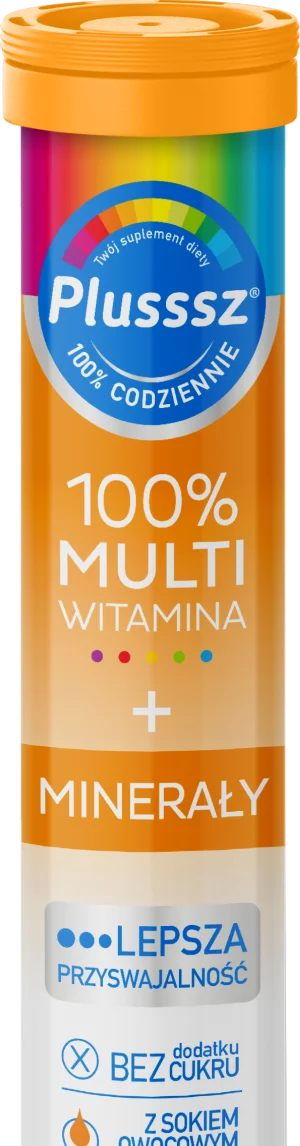
Plusssz is a Polish-based supplement brand, sold in the UK, that builds its electrolyte and multivitamin formulations around the specific needs of active people who do not stop being active people just because they are sitting at a desk. The electrolyte hydration range is formulated with no added sugar, which matters enormously for anyone using these products outside of a post-training context.
For someone who trains in the morning and then works an eight-hour day, the challenge is maintaining electrolyte balance across both contexts. A product with added sugar is counterproductive after 11am. A clean electrolyte formula that supports fluid absorption without driving a glucose spike is what the workday actually requires.
Plusssz formulations also reflect the brand's focus on improved nutrient assimilability. Getting the right balance of sodium, potassium, and magnesium into a format that the body can use efficiently during a long desk-based day is a design decision, not an accident. It is what separates a functional hydration product from a flavoured water with a label.
If someone at your office, gym, or running club recommended Plusssz, that recommendation almost certainly came from direct experience of the difference between ordinary hydration and electrolyte-supported hydration. The cognitive benefit at work is a consistent piece of that feedback.
Faster than most people expect. Research indicates that cognitive impairment from fluid loss can begin at just 1 percent dehydration, which can be reached within the first two hours of a working day if you have not drunk adequately since waking. The effects on attention and short-term memory are measurable within that timeframe, even if they are subtle enough that you attribute them to tiredness or stress rather than hydration.
Plain water helps, but it is not the complete answer. Without electrolytes, particularly sodium and potassium, water is absorbed and excreted less efficiently. Sustained cognitive performance across a full working day depends on cellular hydration, which requires adequate electrolytes alongside fluid. This is especially true for anyone who exercises in addition to working a full day.
The afternoon slump is partly circadian, but it is significantly amplified by cumulative dehydration and electrolyte imbalance. If you are drinking plain water without electrolytes, and consuming coffee through the morning, you may be losing electrolytes faster than you are replacing them. Switching to an electrolyte drink in the early afternoon, before the slump begins, is often more effective than another coffee or a snack.
In practice, yes. The difference is most noticeable in tasks that require sustained attention over 60 to 90 minutes, things like writing, analysis, or back-to-back meetings. People who introduce electrolyte hydration alongside their water intake consistently report fewer attention lapses and less perceived cognitive effort during those extended tasks. It is not dramatic. It is consistent, which is more valuable for a working day.
The NHS baseline of 1.5 to 2 litres is the minimum for a sedentary adult. If you train before or after work, work in a heated or air-conditioned environment, or consume caffeine regularly, that figure should be closer to 2.5 to 3 litres. Spreading that intake across the day in regular intervals is more effective than drinking large amounts infrequently.
Yes, and this is one of the most direct and underestimated ways that dehydration affects workplace performance. Dehydration-related headaches are caused by a reduction in brain fluid volume, which creates tension on the meninges, the membranes surrounding the brain. These headaches are typically felt at the front of the head or behind the eyes and respond well to rehydration with electrolytes, often more quickly than they respond to over-the-counter pain relief alone.
Have you noticed a connection between your water intake and your focus levels at work? Share what has or has not worked for you below, because the right hydration approach is not always obvious and practical experience from real working days is genuinely useful.