Many active women in the UK take a multivitamin daily without ever checking whether the formula actually matches their physiology. That is a problem. A generic supplement designed for a 70kg male athlete delivers the wrong nutrient ratios, wrong iron levels, and often the wrong forms of key vitamins entirely. Research published by the British Dietetic Association estimates that up to 48% of UK women have low vitamin D status, yet most off-the-shelf multivitamins under-dose this nutrient significantly. Finding the right multivitamin for women UK means knowing exactly which ingredients matter, which forms the body actually absorbs, and which marketing claims to ignore completely.
Key Insight |
Explanation |
|---|---|
Iron dose matters by life stage |
Pre-menopausal women typically need 14-18mg of iron daily; post-menopausal women need far less. A single formula does not suit all ages. |
Vitamin D3 beats D2 for absorption |
Cholecalciferol (D3) raises serum 25(OH)D levels roughly 87% more effectively than ergocalciferol (D2) in clinical trials. |
Folate vs. folic acid is not a trivial difference |
Up to 40% of the population carries an MTHFR gene variant that reduces their ability to convert folic acid into the active form. Methylfolate bypasses this problem. |
No-added-sugar formulas support metabolic health |
Gummy vitamins often contain 2-4g of sugar per serving. For active women monitoring carbohydrate intake, this adds up across training weeks. |
B12 as methylcobalamin, not cyanocobalamin |
Methylcobalamin is the biologically active form. Cyanocobalamin must be converted by the liver and is poorly retained in nervous tissue. |
Magnesium supports muscle recovery |
Active women frequently deplete magnesium through sweat. A quality women's complex should include 150-300mg of an absorbable form such as bisglycinate. |
Avoid formulas that exceed UL for fat-soluble vitamins |
Vitamins A, D, E, and K accumulate in tissue. Formulas stacking retinol beyond 800mcg RAE without dietary context risk toxicity over time. |

The phrase "women's multivitamin" gets thrown around loosely, but the physiological case for a genuinely differentiated formula is solid. Women have distinct nutrient needs driven by hormonal cycles, reproductive status, bone density considerations, and the specific stressors that come with regular physical training. A common mistake is assuming that halving the dose of a men's formula is equivalent to making a women's product. It is not.
Iron is the clearest example. Pre-menopausal women lose iron through menstruation every month, and the UK NHS recommends a daily intake of 14.8mg for this group. Most men need only 8.7mg. Getting this wrong in either direction has real consequences: too little iron contributes to fatigue and reduced aerobic capacity; too much causes oxidative stress and gastrointestinal problems.
Calcium and vitamin K2 are equally important to frame correctly for women. Bone mineral density peaks around age 30 and declines steadily thereafter, accelerating after menopause. The best women's multivitamin formulas account for this by pairing calcium with vitamin K2 (as MK-7), which directs calcium toward bones rather than arterial walls. This combination is rarely found in generic multivitamins.
Stripping a women's multivitamin down to its non-negotiables makes it easier to evaluate any product quickly. The following nutrients are not optional inclusions. They are the minimum specification for a formula worth taking.
As noted above, 14.8mg is the reference nutrient intake for pre-menopausal women in the UK. The form matters too. Ferrous bisglycinate causes significantly less gastrointestinal irritation than ferrous sulfate while maintaining comparable absorption rates. If a product uses ferrous sulfate, be aware that it may cause nausea, particularly when taken without food.
This is one of the most overlooked distinctions in women's supplement formulation. Methylfolate (5-MTHF) is the active, immediately usable form of folate. It matters for DNA synthesis, red blood cell production, and particularly during pregnancy where neural tube development depends on adequate folate. Any brand still using synthetic folic acid as its only folate source is behind the science by roughly a decade.
The NHS recommends 10mcg (400 IU) as a daily minimum for adults in the UK, but research from the University of Birmingham and others consistently demonstrates that many active adults need 25-50mcg (1000-2000 IU) to maintain optimal serum levels year-round. A formula providing only 5mcg is not doing the job for a woman training outdoors through a UK winter.
Vitamins for active women must include the full B-complex because B1, B2, B3, B5, B6, B7, B9, and B12 are collectively involved in energy metabolism, red blood cell production, and neurological function. The key here is completeness. Formulas that include only B6 and B12 are cutting corners.
The difference between a cheap multivitamin and a well-formulated one often comes down to the chemical forms of each nutrient rather than the headline doses on the front of the pack. In practice, a product can list 500mg of magnesium and deliver almost none of it to muscle tissue if the form is magnesium oxide, which has a bioavailability of around 4% according to data published in the journal Magnesium Research.
"The form of a mineral is not a footnote on the label. It is the primary determinant of whether the supplement works at all." Dr. Rhonda Patrick, biomedical scientist and nutrition researcher.
Here is a quick guide to the forms worth prioritising:
When evaluating any product, turn the pack over and read the supplement facts panel. If the forms are not listed, that is itself a red flag. Reputable manufacturers are transparent about which chemical forms they use precisely because it is a differentiator.
Pro tip: Search for "supplement facts" rather than "nutrition facts" on any product page. If the brand has not published a full supplement facts panel listing both nutrient amounts and their chemical forms, do not buy the product until they do.

Women who train regularly, whether that means running, cycling, HIIT, swimming, or strength work, have elevated requirements in several categories that standard sedentary-population RDAs do not capture. The data consistently shows that sweat losses, elevated metabolic rate, and increased oxidative stress from exercise change the calculus considerably.
Intense exercise generates reactive oxygen species (free radicals) at a rate that dietary antioxidants help neutralise. Vitamin C at 200-500mg per day, vitamin E as mixed tocopherols, and selenium as selenomethionine are the three most evidence-backed antioxidant inclusions for active women. Note that mega-dosing antioxidants is counterproductive. Evidence from the Karolinska Institute suggests that very high antioxidant doses can blunt training adaptations by interfering with mitochondrial signalling. Balance is the goal.
Iodine deficiency in UK women is more prevalent than most people expect. A 2011 study in The Lancet found that two-thirds of UK schoolgirls were iodine deficient, and the situation has not resolved dramatically since then. Thyroid hormones regulate basal metabolic rate and are directly involved in energy availability during training. A women's multivitamin that does not include 150mcg of iodine is missing an important nutrient for this population.
Vitamin K1 (phylloquinone) handles blood clotting. Vitamin K2 (menaquinone, particularly MK-7) activates osteocalcin and matrix Gla protein, the proteins responsible for putting calcium into bone and keeping it out of arteries. For women approaching their 30s and beyond, this nutrient is not a luxury add-on. It is structural.
Pro tip: If you already take a separate vitamin D3 supplement and want to start a women's multivitamin, check whether the multivitamin already includes D3 and K2 together. Doubling up on D3 without accounting for total daily intake is a common error that active women make when combining multiple supplements.
Some product features look positive on first glance but indicate a formula that prioritises cost over effectiveness. Learning to spot them quickly saves money and protects health.
A product can legally list 20+ nutrients and still be nutritionally meaningless if each one is included at 5% of the recommended intake. The label says "contains 22 essential vitamins and minerals" while delivering almost nothing useful. Always check the actual amounts against UK reference nutrient intakes (RNIs), not just whether a nutrient appears on the list.
If a label lists "women's blend 450mg" without breaking down how much of each ingredient is in the blend, the manufacturer is hiding something. This practice is less common in UK-regulated products than in some US supplements, but it still appears. Any formula that does not fully disclose individual ingredient amounts is not worth trusting.
Gummy vitamins are popular because they taste good. They are also frequently loaded with sugar, corn syrup, or artificial sweeteners, and the gummy matrix itself can reduce the stability and bioavailability of certain nutrients, particularly B vitamins. For women who are active and mindful of their carbohydrate intake, a no-added-sugar tablet or capsule format is a straightforwardly better choice.
This is a formulation error that is surprisingly common. Calcium and iron compete for the same intestinal transporters. Taking them together reduces the absorption of both. A well-designed formula either separates them into different daily doses or deliberately excludes one to avoid the conflict.
Approach |
Strengths |
Weaknesses |
|---|---|---|
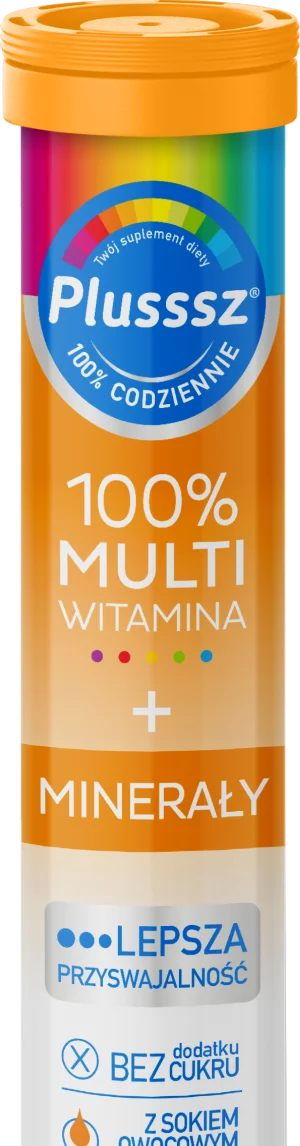
Comprehensive women's multivitamin complex (e.g. Plusssz Women's formula) |
Targeted nutrient ratios for female physiology, no added sugar, includes K2 and methylfolate, one daily dose |
Requires knowing your life stage to choose the right variant; not a substitute for whole-food nutrition |
Generic sport multivitamin designed for both sexes (common in sport brands) |
Often well-dosed for B-vitamins and antioxidants; easy to find in sports retailers |
Iron levels calibrated for men; may include excess nutrients women do not need; rarely includes K2 or methylfolate |
Stacking individual supplements (separate iron, D3, B12, magnesium) |
Maximum control over doses and forms; can be adjusted seasonally |
Expensive, complex to manage, easy to create nutrient competition (e.g. calcium-iron conflict), time-consuming |
The data consistently shows that most active women do best with a purpose-built women's formula rather than a stacked individual approach, unless they have a clinically confirmed deficiency that requires therapeutic doses beyond what a multivitamin can provide. The stacking approach makes sense as a complement to a strong base formula, not as a replacement for it.
A multivitamin addresses micronutrient gaps. An electrolyte supplement addresses the minerals lost through sweat during training: primarily sodium, potassium, magnesium, and chloride. These two product categories serve different functions and work best together rather than instead of each other.
The practical pairing strategy is straightforward. Take your women's multivitamin with a meal, typically breakfast or lunch, to optimise fat-soluble vitamin absorption (vitamins A, D, E, and K all absorb better in the presence of dietary fat). Use a no-added-sugar electrolyte formula around your training sessions, specifically before, during, or after workouts lasting longer than 45-60 minutes or conducted in warm conditions where sweat losses are meaningful.
One common overlap to watch is magnesium. A quality women's multivitamin will typically include 150-200mg of magnesium. A dedicated electrolyte product may add another 50-100mg per serving. Combined, this is still within safe daily limits for most adults (the NHS upper safe limit is 400mg from supplements), but it is worth being aware of your total intake if you are taking both daily.
For women who train more than four times per week, the combination of a well-formulated multivitamin and a no-added-sugar electrolyte product is a genuinely meaningful nutritional foundation. Neither product is a performance enhancer in the dramatic sense. What they do is remove the micronutrient and hydration deficits that predictably erode training quality, recovery, and energy levels when left unaddressed.
Yes, meaningfully so. The most important differences are iron content, which should be higher for pre-menopausal women, and the inclusion of nutrients specific to female bone health and hormonal balance such as vitamin K2, methylfolate, and iodine at appropriate levels. A men's multivitamin taken by a woman will typically deliver too little iron, the wrong folate form, and calcium and K2 ratios not calibrated for female bone density needs.
With a meal containing dietary fat, preferably breakfast or lunch. Fat-soluble vitamins (A, D, E, K) require fat for absorption. Taking a multivitamin on an empty stomach increases the likelihood of nausea, particularly from iron and B vitamins. Morning dosing also tends to improve consistency because it attaches to an existing routine.
Yes, and for active women this combination is recommended. The two products address different nutritional needs. The multivitamin covers micronutrient gaps in vitamins and trace minerals. The electrolyte formula replaces sweat losses during and after training. Just check that your combined daily magnesium intake stays below the 400mg supplement limit recommended by the NHS.
In most cases, yes. Post-menopausal women require significantly less iron because menstrual losses have stopped. They also have higher calcium and vitamin D needs due to accelerated bone density loss following the decline in oestrogen. A formula designed specifically for post-menopausal women will reflect these changes. Using a pre-menopausal formula post-menopause risks excess iron accumulation, which is associated with increased oxidative damage.
Energy levels and mood, particularly if you were low in B12, iron, or vitamin D, can improve within two to four weeks. Bone health and immune function improvements operate over months and are not something you will feel acutely. The honest answer is that the most important effects of a good multivitamin are the deficiency-related problems you do not develop, which makes consistent daily use the correct long-term strategy rather than waiting for a noticeable effect.
Generally no, for two reasons. First, gummy formats typically contain added sugar or sweeteners, which many active women are specifically trying to avoid. Second, the gummy matrix can reduce the stability of certain nutrients, especially B vitamins, which are sensitive to moisture and heat. Capsule and tablet formats from quality manufacturers consistently deliver more stable and accurately dosed nutrients.
If you have tried a women's multivitamin that genuinely changed how you feel during training or recovery, or if you have questions about what to look for in a specific formula, share your experience in the comments below.