If someone told you that the multivitamin your partner takes is probably working against your specific biology, would you believe them? Most people assume a multivitamin is a multivitamin. The data consistently shows otherwise. Men and women have measurably different micronutrient requirements at almost every life stage, and a one-size-fits-all tablet rarely optimises for either. Choosing the right multivitamin for women UK or men's equivalent is not a marketing exercise. It is a physiology-led decision, and this article breaks down exactly why that matters.
Key Insight |
Explanation |
|---|---|
Women need significantly more iron than men in reproductive years |
The NHS recommends 14.8 mg of iron daily for women aged 19 to 50, versus 8.7 mg for men. Menstrual losses make this difference critical, not cosmetic. |
Men need higher levels of zinc for hormonal and immune function |
Zinc supports testosterone regulation and prostate health. Men consistently deplete zinc faster through sweat during exercise, making replenishment more urgent for active males. |
Folate requirements spike for women of childbearing age |
400 mcg of folic acid daily is the standard recommendation before and during early pregnancy. This is not relevant for men at the same priority level. |
Active individuals of both sexes deplete B vitamins faster |
Energy metabolism during exercise burns through B1, B2, B6, and B12 at a higher rate. Gender-specific formulas must account for activity level, not just biology. |
Excess iron in men is linked to oxidative stress |
Research published in journals indexed by the National Institutes of Health shows elevated iron stores in men correlate with increased cardiovascular risk. Men's formulas should exclude or minimise iron. |
Vitamin D deficiency is common across both sexes in the UK |
Public Health England recommends 10 mcg daily for all adults, particularly from October to March. This is one area where the gap between male and female needs is smaller. |
Specialised formulas reduce the risk of over-supplementation |
Taking a gender-neutral multivitamin means some nutrients are dosed for the average of both sexes, leaving one group under-served and potentially over-supplementing the other on specific compounds. |

The difference between male and female micronutrient requirements is not a marketing concept invented by supplement brands. It is grounded in endocrinology, haematology, and decades of dietary reference values published by bodies including the NHS and the European Food Safety Authority.
Women in reproductive years lose iron monthly through menstruation. Their risk of iron-deficiency anaemia is substantially higher than men of the same age. Men, by contrast, accumulate iron more readily, and excess storage iron is increasingly linked to cardiovascular and metabolic stress. Giving both sexes the same iron dose is, bluntly, a bad idea.
Hormonal architecture also differs at a fundamental level. Oestrogen affects calcium absorption and bone density turnover, making magnesium and vitamin K2 especially relevant for women. Testosterone production in men relies on adequate zinc and vitamin D status. These are not interchangeable priorities.
The NHS Dietary Reference Values provide specific reference nutrient intakes by sex and age group. For iron, the gap is nearly double: 14.8 mg for women aged 19 to 50 versus 8.7 mg for men in the same bracket. For zinc, the values flip: 9.5 mg for men versus 7 mg for women. For iodine, the values are similar, but women who are pregnant face dramatically increased requirements.
In practice, a unisex multivitamin that tries to split the difference on iron will either under-serve a woman's genuine need or push a man's intake into territory associated with oxidative risk. Neither outcome is acceptable when formulating for active, health-conscious adults.
The case for a dedicated multivitamin for women UK formulation becomes very clear when you map female physiology onto daily micronutrient demands. This is not about giving women a pink label. It is about dosing nutrients at levels that reflect what their bodies actually require.
Iron is the most discussed, and for good reason. Monthly blood loss during menstruation creates a recurring deficit that diet alone struggles to close for many women, particularly those who are active and burning through stored nutrients more quickly. Low iron manifests as fatigue, poor concentration, and reduced exercise capacity, symptoms that are easy to misattribute to overtraining.
Folate is equally important, and not just for pregnancy. Adequate folate status supports red blood cell formation, homocysteine regulation, and neurological function year-round. Women of childbearing age are the primary audience, but peri-menopausal women also benefit from consistent folate intake due to its role in cardiovascular health.
Women experience accelerated bone density loss after menopause due to declining oestrogen. But the groundwork for bone density is laid in the twenties and thirties. A multivitamin formulated for women should include meaningful levels of calcium alongside vitamin K2, which directs calcium into bone rather than arterial walls.
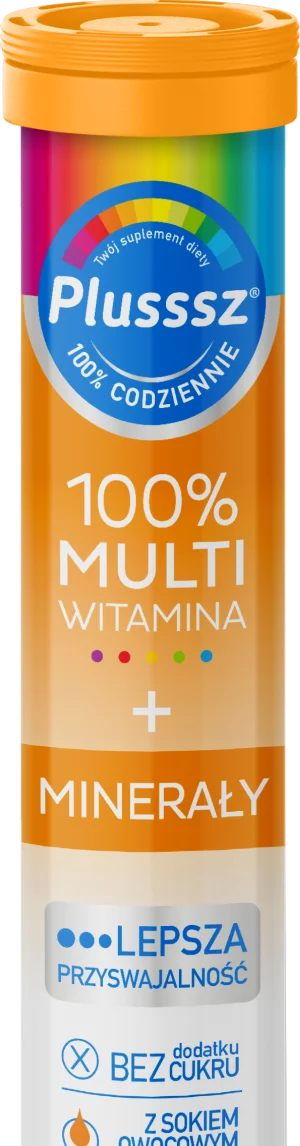
Many generic multivitamins include token calcium doses that make no clinical difference. The Plusssz 100% Multivitamin WOMAN addresses this with a considered approach to bone-relevant nutrients, reflecting what active women genuinely need rather than what fits neatly into a standard tablet weight.
Pro tip: If you are an active woman training more than four times per week, prioritise a multivitamin that pairs iron with vitamin C. Vitamin C significantly enhances non-haem iron absorption, making the iron in your supplement far more bioavailable than it would be taken alone.
The multivitamin for men UK category is not simply about removing iron and adding extra zinc. The most effective men's formulas reflect the interplay between testosterone metabolism, cardiovascular risk factors, and the oxidative demands that come with regular intense exercise.
Zinc is central to testosterone synthesis and immune regulation in men. Athletes lose significant zinc through sweat, and even moderate deficiency is associated with reduced testosterone levels and impaired recovery. The data consistently shows that active men are one of the highest-risk groups for functional zinc deficiency, even among those eating a broadly adequate diet.
Selenium works alongside zinc in protecting against oxidative damage, particularly relevant for men given that sperm production is highly sensitive to oxidative stress. It also contributes to thyroid hormone metabolism, which affects energy levels and metabolic rate across both sexes but is formulated at higher priority in men's blends due to the combined hormonal picture.
Men typically carry more muscle mass and engage in higher-intensity exercise loads on average. This increases the demand for B vitamins involved in energy metabolism: B1 (thiamine), B2 (riboflavin), B3 (niacin), and B6. These are water-soluble, not stored in meaningful quantities, and need consistent daily replenishment.
The Plusssz 100% Multivitamin MEN formula is built around this reality, providing B vitamin levels calibrated for an active male who is not just sitting at a desk but training, recovering, and demanding more from their metabolism every week.

Most multivitamin articles discuss gender differences in sedentary or lightly active populations. The equation shifts considerably when you factor in regular structured training. Both men and women who train consistently face micronutrient demands that standard dietary reference values, designed for the average population, do not fully capture.
Sweat losses during exercise deplete electrolytes and water-soluble vitamins at a rate that a desk worker's dietary intake would never need to compensate for. This is precisely why Plusssz exists as a brand: the intersection of active lifestyle and targeted supplementation is the company's core focus, and it shows in how both the multivitamin and electrolyte product lines are formulated.
Active women face a compounded challenge. They have the baseline higher iron and folate requirements of female physiology, plus the sweat-related losses of magnesium, B vitamins, and vitamin C that come with regular training. This makes a sports-oriented multivitamin for women materially different from a generic pharmacy shelf product aimed at a sedentary demographic.
A common mistake is for active women to assume that because they eat well, supplementation is unnecessary. In practice, research consistently demonstrates that even well-nourished female athletes show subclinical deficiencies in iron, magnesium, and vitamin D at higher rates than sedentary women eating the same diet, because the exercise load consumes more of everything.
Active men lose zinc, magnesium, and B vitamins through sweat in quantities that matter. A training session lasting 60 to 90 minutes at moderate to high intensity can deplete magnesium by 10 to 15 percent of daily requirements through sweat alone. Without consistent replenishment, this accumulates into a functional deficiency over weeks.
Pro tip: If you are pairing a gender-specific multivitamin with an electrolyte product from Plusssz, check that you are not duplicating high doses of the same minerals. A well-designed stack complements rather than overlaps, and Plusssz formulates both product lines with this in mind.
The Plusssz 100% Multivitamin WOMAN and Plusssz 100% Multivitamin MEN are not the same product in different packaging. They reflect genuinely different nutritional priorities, which is the only reason gender-specific formulation is worth doing at all.
The WOMAN formula places emphasis on iron at levels appropriate for reproductive-age women, folate for cellular health and cardiovascular support, vitamin K2 and calcium for bone integrity, and a B-complex calibrated for female energy metabolism. Crucially, it is formulated with no added sugar and with a focus on nutrient assimilability, which matters because many standard iron supplements have poor bioavailability.
The MEN formula centres on zinc at levels supporting testosterone and immune function, selenium for antioxidant and reproductive health, higher B vitamin doses aligned with greater average muscle mass and training demands, and vitamin D3 at a meaningful dose rather than a token inclusion. Iron is excluded or minimised, reflecting the cardiovascular risk associated with excess iron storage in men.
"Nutrient requirements vary considerably by sex, age, and physiological state. Dietary reference values represent population averages, and individuals with higher activity levels or specific health conditions may have substantially different needs." - European Food Safety Authority, Dietary Reference Values for the EU
The practical takeaway is that if you are buying one product for a household with both a male and female partner, you are not doing either person a favour. Two correctly targeted formulas deliver better outcomes than one compromise formula delivers for both.
Feature |
Gender-Specific Formula (e.g., Plusssz WOMAN or MEN) |
Universal Unisex Multivitamin |
|---|---|---|
Iron dosing |
Calibrated: higher in WOMAN, excluded or minimal in MEN |
Split-the-difference dose that may under-serve women or excess-dose men |
Zinc dosing |
Higher in MEN formula to match testosterone and sweat-loss needs |
Average dose that often falls short for active men |
Folate inclusion |
Prioritised in WOMAN for reproductive and cardiovascular health |
Often included at lower levels as a generic addition |
Bone-health nutrients (K2, calcium) |
Emphasised in WOMAN formula given oestrogen-related bone density risk |
Often underdosed or absent due to tablet size constraints |
Suitability for active individuals |
Formulated with exercise demands factored into dosing decisions |
Typically based on sedentary or lightly active reference populations |
Over-supplementation risk |
Lower, because each formula is targeted to one sex's actual requirements |
Higher, particularly for fat-soluble vitamins dosed for broader averages |
The most widespread mistake is buying whatever is cheapest at the pharmacy without reading the label. A product that contains 17 vitamins and minerals means nothing if the doses are all at 10 percent of the reference nutrient intake. Inclusion on a label is not the same as meaningful supplementation.
Not all forms of a nutrient are equally absorbed. Ferrous sulphate and ferrous bisglycinate both provide iron, but the bisglycinate form is substantially better tolerated and absorbed with fewer gastrointestinal side effects. Similarly, magnesium oxide is poorly absorbed compared to magnesium citrate or malate. When evaluating specialized vitamin formulas, the form listed on the ingredient panel matters as much as the quantity.
A 22-year-old female marathon runner and a 55-year-old woman in early menopause have different micronutrient priorities, even within the category of gender-specific supplements. Similarly, a male endurance athlete and a male office worker who lifts weights twice a week have different zinc, magnesium, and B vitamin demands. Gender-specific formulation is the correct starting point, but it is not the end of the conversation.
This is particularly common among people who have discovered electrolyte hydration products. Electrolyte supplements address sodium, potassium, magnesium, and chloride balance during and after training. They do not cover fat-soluble vitamins, folate, zinc, selenium, or the full B-complex spectrum. The two product categories work together, and Plusssz designs its electrolyte and multivitamin lines with this complementary role explicitly in mind. Using both correctly means no redundancy and no gaps.
She can, but it is not ideal. A men's formula will typically provide little or no iron, which is a significant gap for women in reproductive years. It may also under-dose folate and bone-supporting nutrients like vitamin K2. Using a men's formula occasionally will not cause harm, but relying on it as a regular supplement means consistently missing key nutrients specific to female physiology. The Plusssz 100% Multivitamin WOMAN is specifically built to fill those gaps.
Yes, this is a legitimate concern. Men do not lose iron through menstruation, so they have no comparable mechanism for offloading excess iron stores. Research indexed by the National Institutes of Health links elevated ferritin levels in men to increased oxidative stress and cardiovascular risk. A well-formulated men's multivitamin, including the Plusssz 100% Multivitamin MEN, should contain minimal or no iron for this reason.
The cynicism is understandable, but the science does not support the dismissal. NHS Dietary Reference Values, European Food Safety Authority guidelines, and peer-reviewed nutritional research all confirm that iron, zinc, folate, and several other micronutrients have meaningfully different recommended intakes by sex. Brands that use different formulations rather than different label colours are doing the work correctly. Check the nutrient panel: if the iron content in the women's version is substantially higher and the zinc content in the men's version is proportionally higher, the product reflects genuine formulation work.
A balanced diet reduces but rarely eliminates micronutrient gaps, particularly for active individuals. UK national diet surveys consistently show that women are more likely to be iron and folate deficient, and men are more likely to be zinc and selenium insufficient, even among those who consider their diet adequate. Exercise increases the depletion rate of most micronutrients. If you train regularly, a targeted multivitamin acts as a reliable safety net rather than a substitute for good diet.
Many sports nutrition brands offer multivitamins as ancillary products alongside their primary energy and protein range. These formulas are often designed for general athletic use without deep differentiation by sex. Plusssz, by contrast, has built gender-specific formulation as a core part of its product identity, meaning the WOMAN and MEN products are primary offerings rather than add-ons. In practice, this typically results in more considered dosing for sex-specific nutrients like iron and zinc rather than a generic athletic multivitamin applied to all customers.
For nutrients addressing a genuine deficiency, most people notice meaningful changes in energy, recovery, and concentration within four to eight weeks of consistent use. Water-soluble vitamins like B12 and B6 can show faster effects, while improvements tied to iron status in women may take eight to twelve weeks given the time required for haemoglobin levels to respond. Consistency matters more than timing: taking your multivitamin at the same time each day with food improves both absorption and habit formation.
If you have switched from a unisex multivitamin to a gender-specific formula like Plusssz 100% Multivitamin WOMAN or MEN, we would genuinely like to know what difference you noticed and when. Share your experience in the comments below.